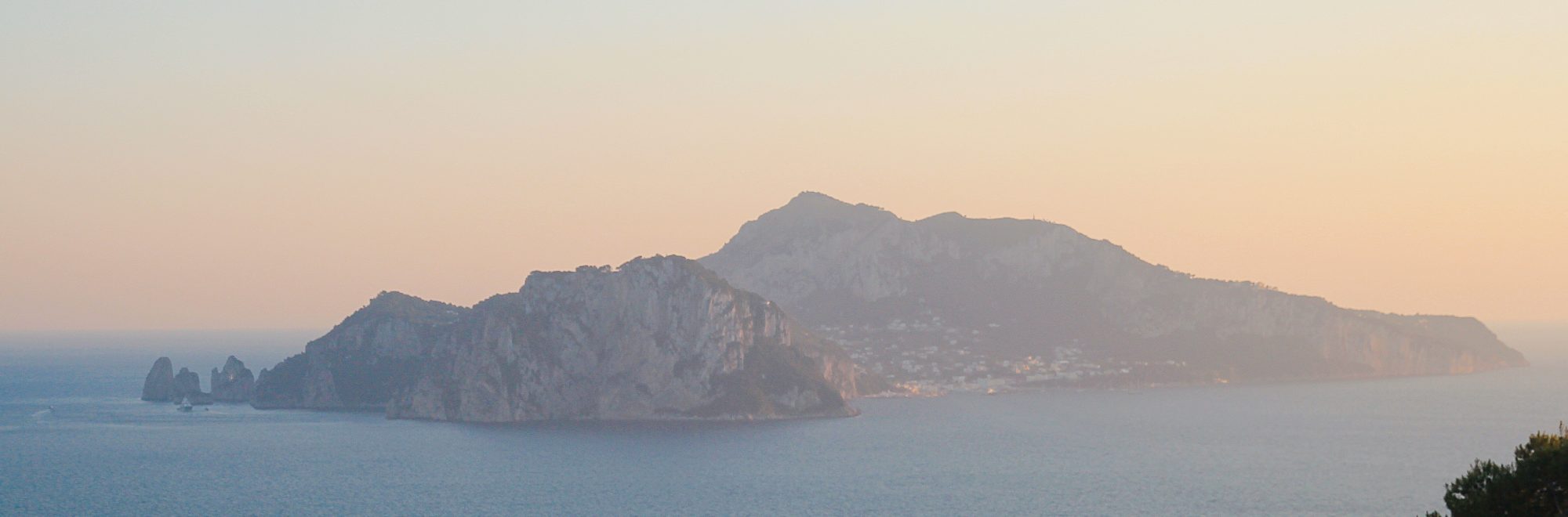
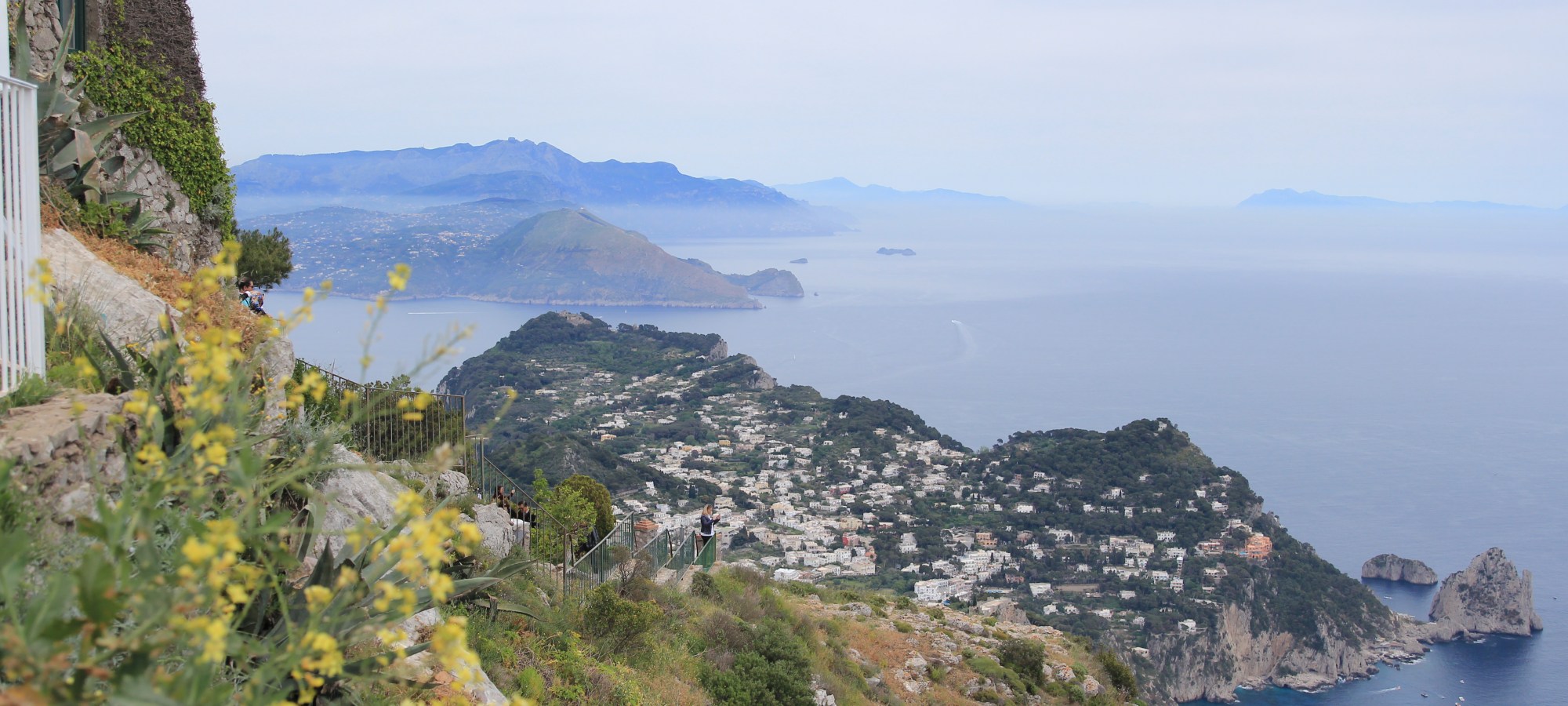
Long before today’s celebrities and millionaires found solace in this glamorous tiny Isle, the ancient Greeks and Roman emperors fell under her spell. There’s a good chance you will too.Read more 10 Fun Facts about Capri
POSTCARDS & PROSECCO SORRENTO, ITALY EDITION 01 JULY 2017 Join me for this video postcard and travel high above the sea, to a lemon scented Italian paradise. South of Naples, nestled on the Sorrentine Peninsula, Sorrento features spectacular views from every direction including the Bay of Naples, Mount Vesuvius, and the Isle of Capri. Greeks, … Read more Summer in Sorrento
Travel to Sorrento and this Italian paradise by the sea and you’ll become part of tradition of dating back more than 2,000 years.Read more 10 Fun Facts about Sorrento
For many years, daydreams of you and your floating water colored castles sustained me, transported me, and carried me away. Still photographs frozen in time and artists’ renditions of you danced in my head, breathing life, and possibilities into my soul. You dear Venezia, delivered a much needed imaginary escape during a series of difficult and tragic times in my life.
Love at first sight
The poets echoing refrain and artists’ masterpieces made me love you, long before we met. For decades you graced my hallway, my desk, and my office, waiting for me to see you again. I heard you calling my name, but was too tired, too heartbroken to answer. Yet, you persisted. You remained in my every day, watching and waiting, decorating the backdrop of my life. And when death came to call a second time, leaving me standing yet again over a gloomy windswept grave, you waited no more. You came for me, rushing in, redirecting my plans, and willing me to your verdant marshes.
As the chimes ring and the pilot speaks I wake to see you from the air above. Still woozy with sleep, I stare silently in disbelief, at your verdantly green islands stretched beneath me. I fear my daydreams may be too lofty to sustain the weight of my expectations. Yet, the thought of you overwhelms my senses. I am equal parts excited and anxious. Curious questions cloud my thoughts.
Soaking in the splendor and a little bubbly
Astounded
Beauty at every corner
The famous zodiac clock in Saint Mark’s Square
Picture perfect
The square all to myself
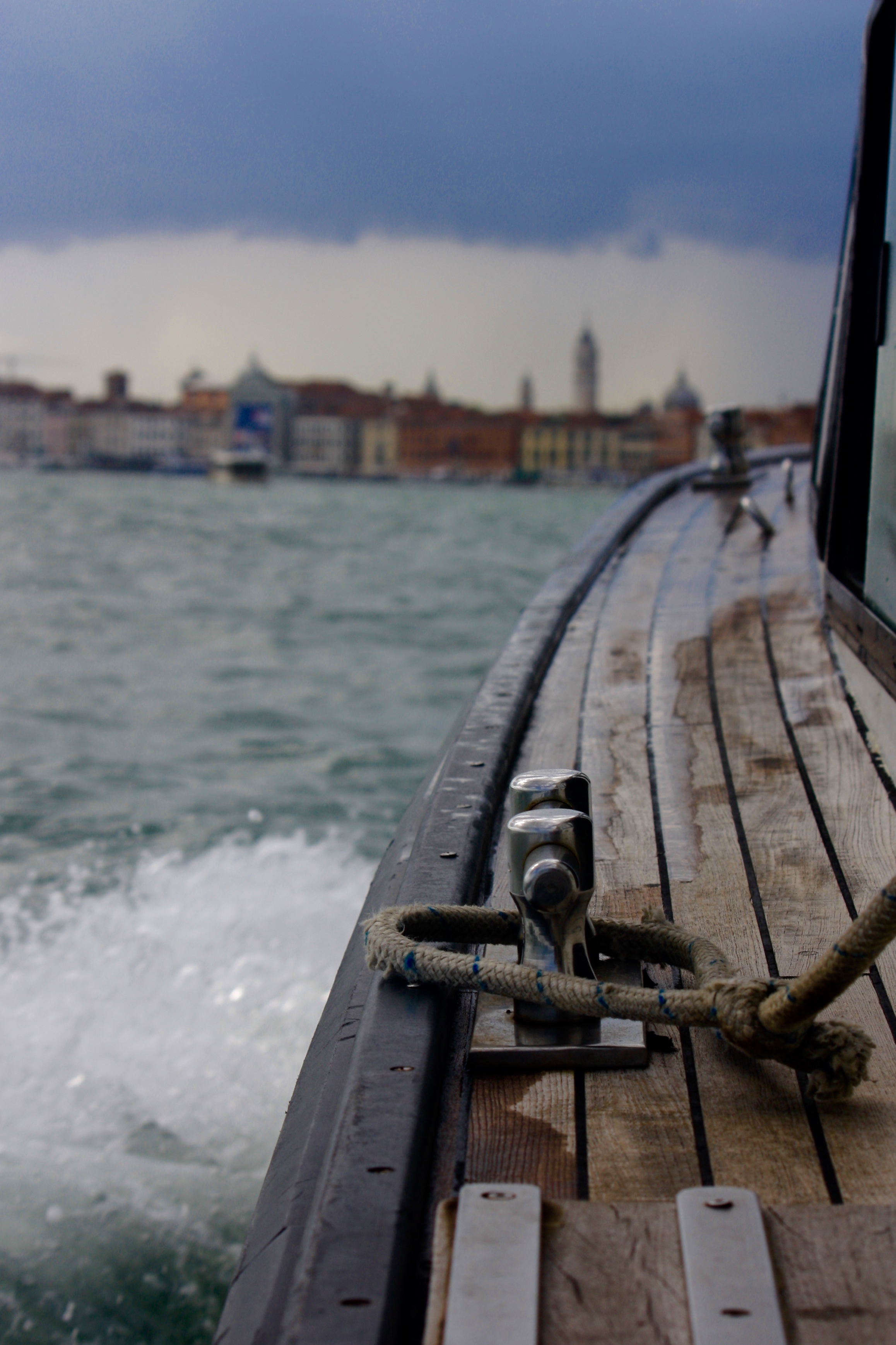
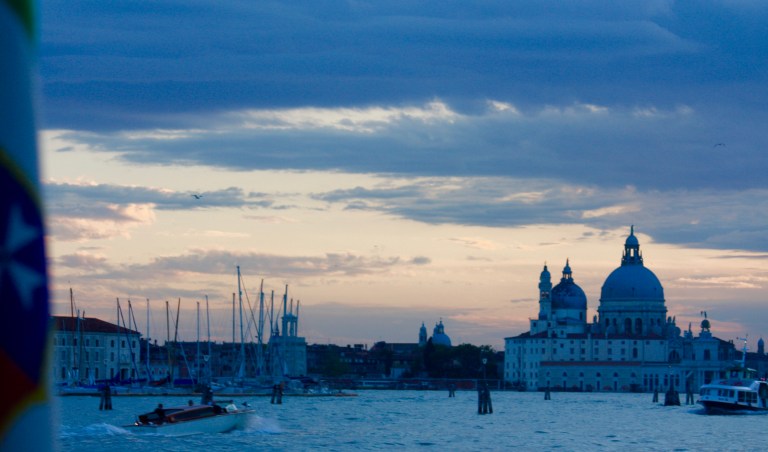
With a mix of adrenaline and sea midst coursing through my veins, I taste the salt water spray on my lips as I travel from the east barrier island, the Lido. At long last, I make my way to you. Much like a bleary eyed child awakening on Christmas morn, I am astonished as I finally see you. I stare, scarcely breathing. In front of me, a kaleidoscope of improbable possibilities. Technicolored moments long admired from across the Atlantic float majestically before me in sea of hypnotic Adriatic blue. Euphoria washes over me as my heart rate quickens. In this moment, I too am floating outside of myself, a soul set free leaving the terra firma in my wake.
Cocktail history is rich with legend and lore. Stories best savored and shared alongside the tales of Margaritas, Martinis, and Bellinis. Italy’s effervescent charmer, the sparkling Spritz of Venezia has her story to tell. As any good devotee, I set off to do a little field research and find the story behind the spritz.
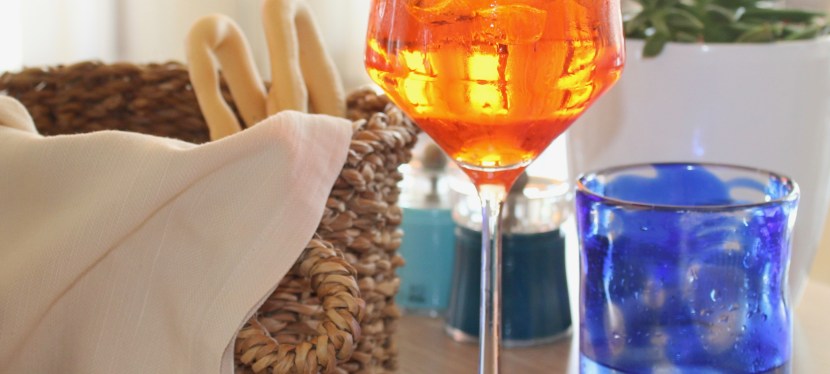
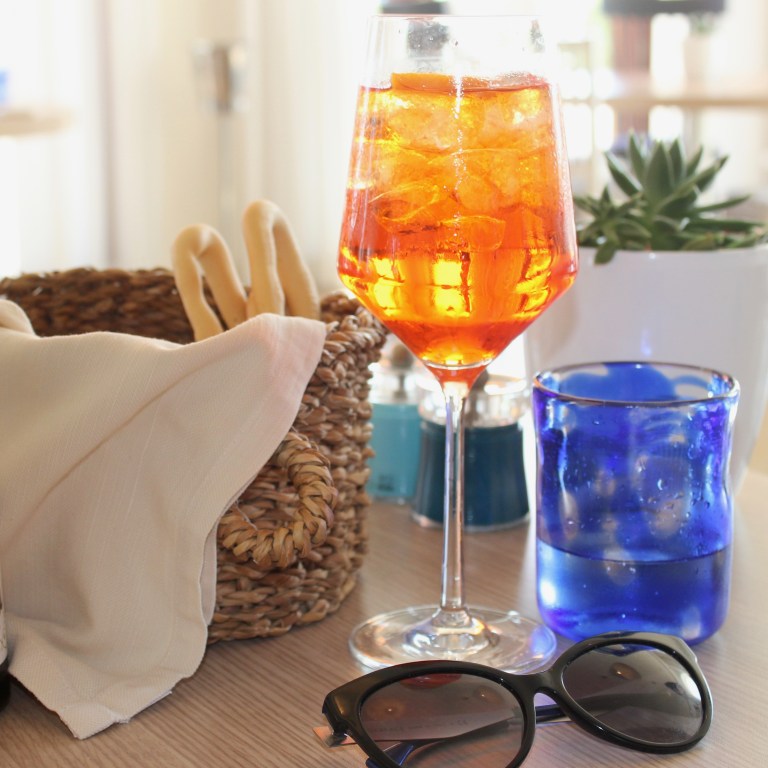
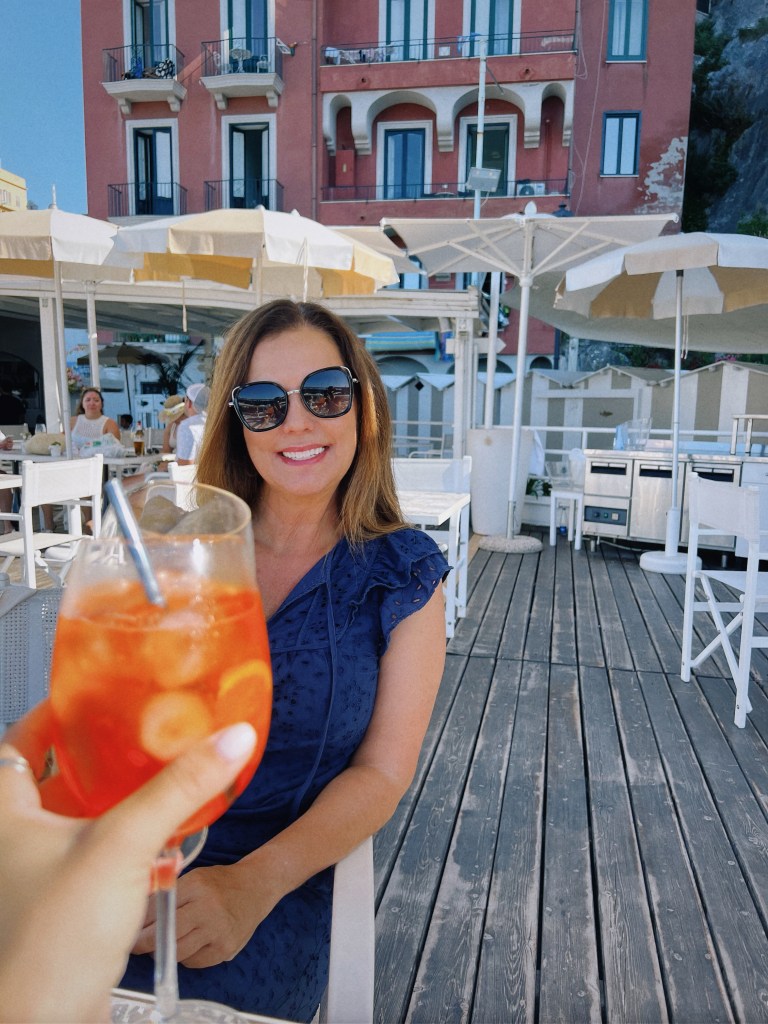
The classic Aperol Spritz in Venice.
BEFORE SHE WAS
FAMOUS
You’ll find Italy’s effervescent darling, the Aperol Spritz, reigning supremely throughout the peninsula. Basking in her burnt orange moment in the sun, this shimmering delight graces the hands of locals and tourists alike, delivering a sweet refreshing taste of summer solace.
Yet, it wasn’t always this way. Worlds apart from her glamorous
sister of today, the original spritz was more local then legendary and rather simple
and stout.
Like many legends, there are several conflicting stories surrounding the origin of the spritz– varying in detail from place to place. However, one fact remains the same, the spritz her origins are in Northern Italy (Town & Country, 2019)
Exactly how this glistening goblet arrived at the dance is a subject of great debate. Some will tell you the spritz was created in a frugal attempt to stretch the wine, adding water to make the wine last longer. Others will tout the health benefits of the lighter digestive aperitivo. Designed as a pre-dinner drink, deliberately light on the alcohol, the spritz serves up a series of refreshing herbal ingredients. The combination of wine, soda water, and liquor carefully fashioned together with the help of medicinal herbs stimulate’s your appetite while making the drink your perfect precursor to dinner. Others will tell you another story (and my personal favorite) suggesting that not everyone, especially the Austrian occupiers of Venice, could handle the strength of Veneto white wines. So much so, that a dash of soda water was added, deliberately diluting the full bodied regional wine. An action deemed so offensive to the locals, liqueur was added to soften the insulting blow, and created something new in the process. While you will hear many stories of the spritz, however it came to be, Northern Italians have been mixing soda water, local white wines or prosecco, and a splash of regional liqueur for generations.
BITTERSWEET AND BUBBLY
BITTERSWEET &
BUBBLY
That splash of something extra comes from a variety of bittersweet liqueurs. Designed to stimulate the appetite, while offering a range of alimentary herbs, aperitivos as the Italians know them, offer a light refreshing pre-dinner drink. The herbs used in the liqueurs help with digestion. Exactly one drink is designed to be enjoyed before your meal.
While the spritz remains prominent in Northern Italy, the liqueur used in a regional spritz varies from city to city. While much of the world knows the sweetest of the bunch, Aperol, she is only one of a stylish set of sisters in the bittersweet liquor family. The four most commonly served spritzs’ in Italy include Campari, Aperol, Cynan, and Select. It seems only right that you discover for youself what is your favorite.
Campari, Aperol’s older sister, packs a powerful punch. With a heavier alcohol content at 24% percent, it’s the strongest in the bunch. You’ll also find Campari in a variety of cocktails like the Negroni or one of my favorites the Americano. When in Italy, ordering either one of these cocktails will be sure to win the approval of your bartender.
None the less, when thirsty patrons throughout much of Italy, ask for a spritz, most of them are looking for an Aperol spritz. The sweetest of the bunch and easily recognizable by her bright orange hue, the Aperol Spritz offers a lighter alcohol content and the sweetest option among the bittersweet liquors.
ICE-ICE BABY
Maybe the reason the Spritz, remains the summertime beverage of choice, is because of a decidedly simple, yet brilliant addition that should engender the gratitude of hot and thirsty spritz drinkers around the globe. Ice! The Spritz is one of the very few drinks in Italy that will be served with a generous scoop of ice.
Sales of this sunny cocktail skyrocketed, making Aperol one of the best-selling spirits in all of Italy. According to the Campari , in the Veneto region alone, nearly 300,000 Aperol Spritzes are consumed every day!
So the next time you raise your orange-glow goblet, do so in the direction of Northern Italy, towards Venice, give those ice cubes a swish, and thank the dashing Venetians for this bright, brisk, beverage that pairs so well with la dolce vita.
This month I was featured in Jacksonville University’s Faculty Spotlight. The spotlight focuses on my professional career in communications and higher education. I thought you might like to know a little bit more about me.
1. Where I find my inspiration.
Communications is my passion, my craft, and my expertise. When done well, the ability to effectively communicate embodies art, draws us together, and empowers change. And leaving the world a little better, is something I think we are all called to do.
My work at the university allows me to share my enthusiasm and expertise for communication with the next generation. My students in turn continue to inspire me. For more than a decade and a half my students have produced incredible award winning projects . Their work has gone on to garner recognition from regional, national, and international organizations. In the summer of 2018, the work went global, as an EPIC funded interdisciplinary multimedia and STEAM project was featured at the global Society of Environmental Toxicology and Chemistry in Rome.
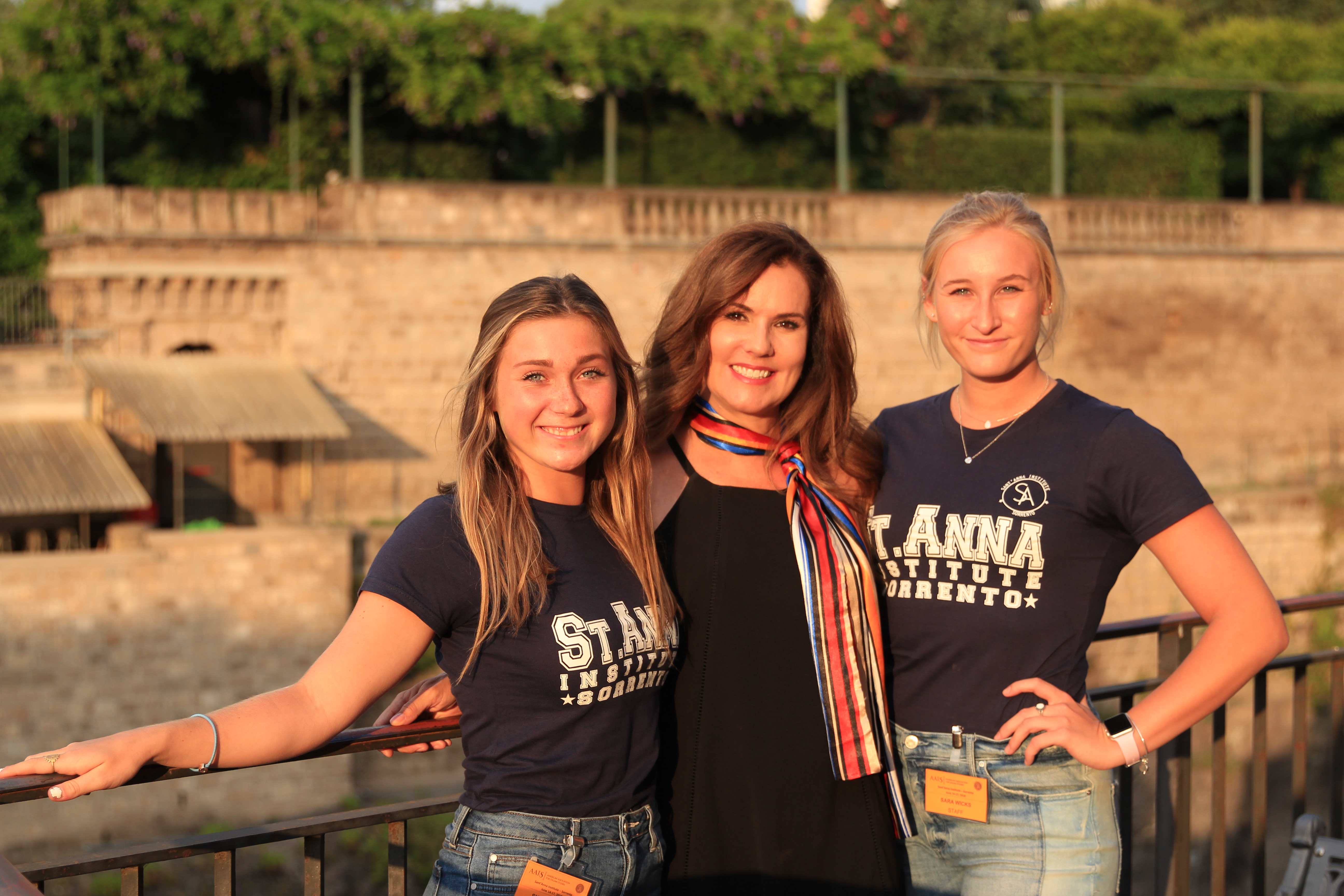
Enjoying the golden light in Sorrento with my students Sylvia Dean, Class of 2019 and Sara Ann Wicks, Class of 2018
2. What I’m working on.
I’ve lead study abroad programs at JU for more than a decade and a half. I am a passionate advocate for quality study abroad programs. I believe education remains the one great hope for vibrant democracies throughout the world. For me, study abroad is an integral part of education, necessary to prepare students for life in an increasingly global community.
During the Summer of 2017, I made a last-minute decision, changed my travels plans and travelled alone from my rented flat in Venice, 500 miles south to Sorrento where I agreed to take a series of meetings. After a few minutes on the property I knew this place was extraordinary.
Today, Jacksonville University is the official university of record for Sant’Anna overseeing the instruction, coursework, and awarding of university credits and transcripts to all students throughout the world earning academic credit through Sant’Anna.
Towering high above Marina Grand, Sant’Anna shines brightly.
3. What you might not know about me.
I interviewed Bill Gates as part of my work with the U.S. Conference of Mayors. In fact, he corrected his assistant when she tried to shorten my name to Ann, reminding her that my name was Annmarie–and endearing himself to me for eternity.
Interviewing Bill Gates for the US Conference of Mayors
In 2013, I was appointed by Mayor Alvin Brown, as the city’s Education Commissioner and senior policy advisor on all matters education. As an executive on loan to City Hall I worked to enhance equitable educational opportunities for our community. I also served on the US Conference of Mayor’s Education Task Force, at a White House Convening on College Access, and was invited to participate in a think tank for the American Association of Colleges and Universities.
I led two community wide education summits, and raised nearly a quarter million dollars through grants, corporate donations, and private donors in support educational initiatives in northeast Florida.
Speaking at Grad Nation advocating for quality educational opportunities for all.
4. I love to write.
Through my website Postcards and Prosecco I’m able to share my more creative work. When I’m not at the university, there’s a good chance I’m off on an adventure of some sort—looking, listening, and learning from the shared experiences of others. Before I became a professor, I was a television broadcast journalist and came to understand and appreciate the beauty of storytelling through images and words.
In the classroom, I remind my students that “Facts are Fun” as I challenge them to move their work out of opinion and into fact based communications. To help illustrate this concept, I developed a series of online travel articles using the “Fun Facts” theme. Over the years, the collection has grown. If you google facts + Santorini, you’ll find my Fun Facts about Santorini at the top of the search. Of all the things I do in the classroom, this google search may be the one that has given me the most credibility with my students.
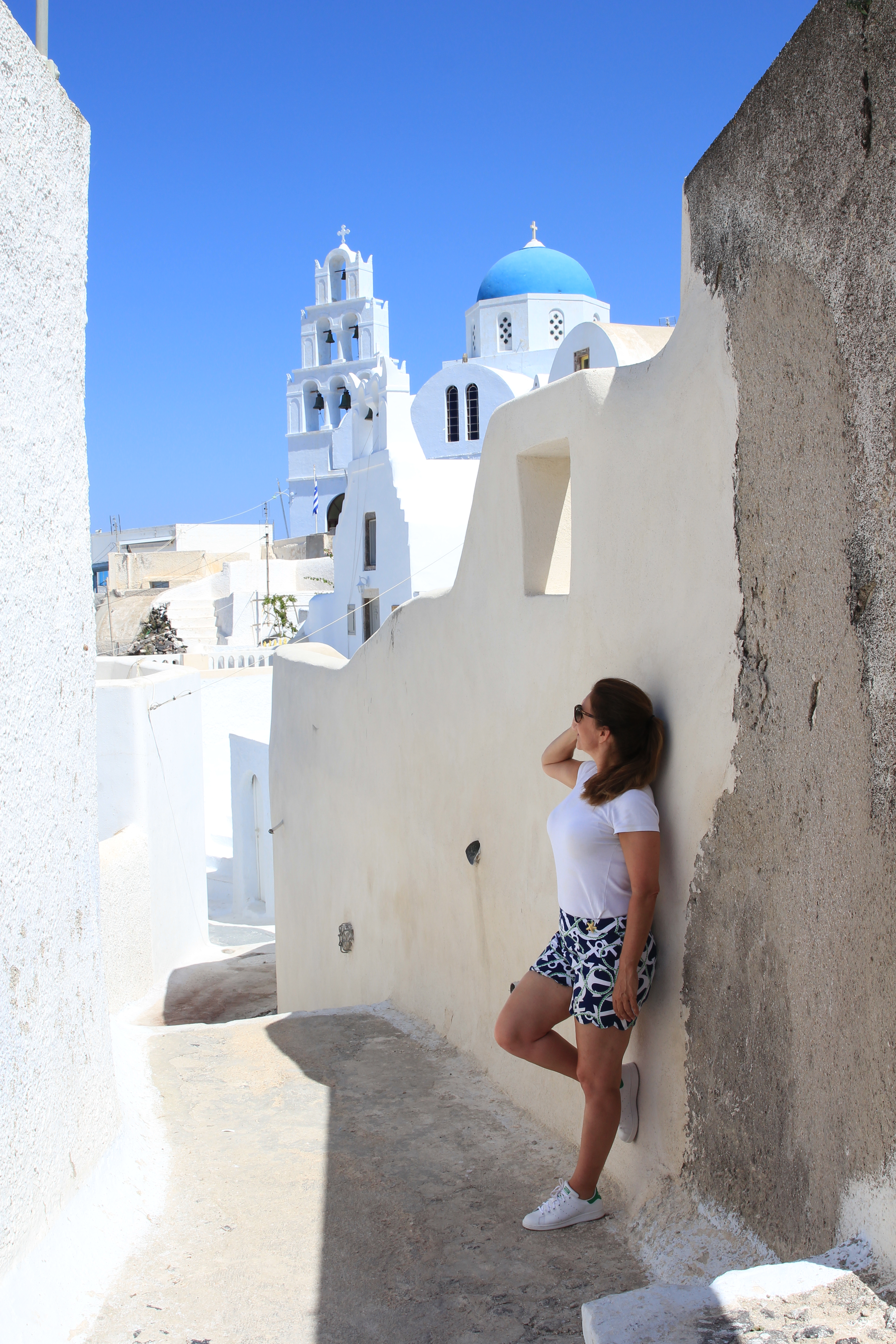
The blue dome and bell tower of Pyrgos
5. I’m always caffeinated.
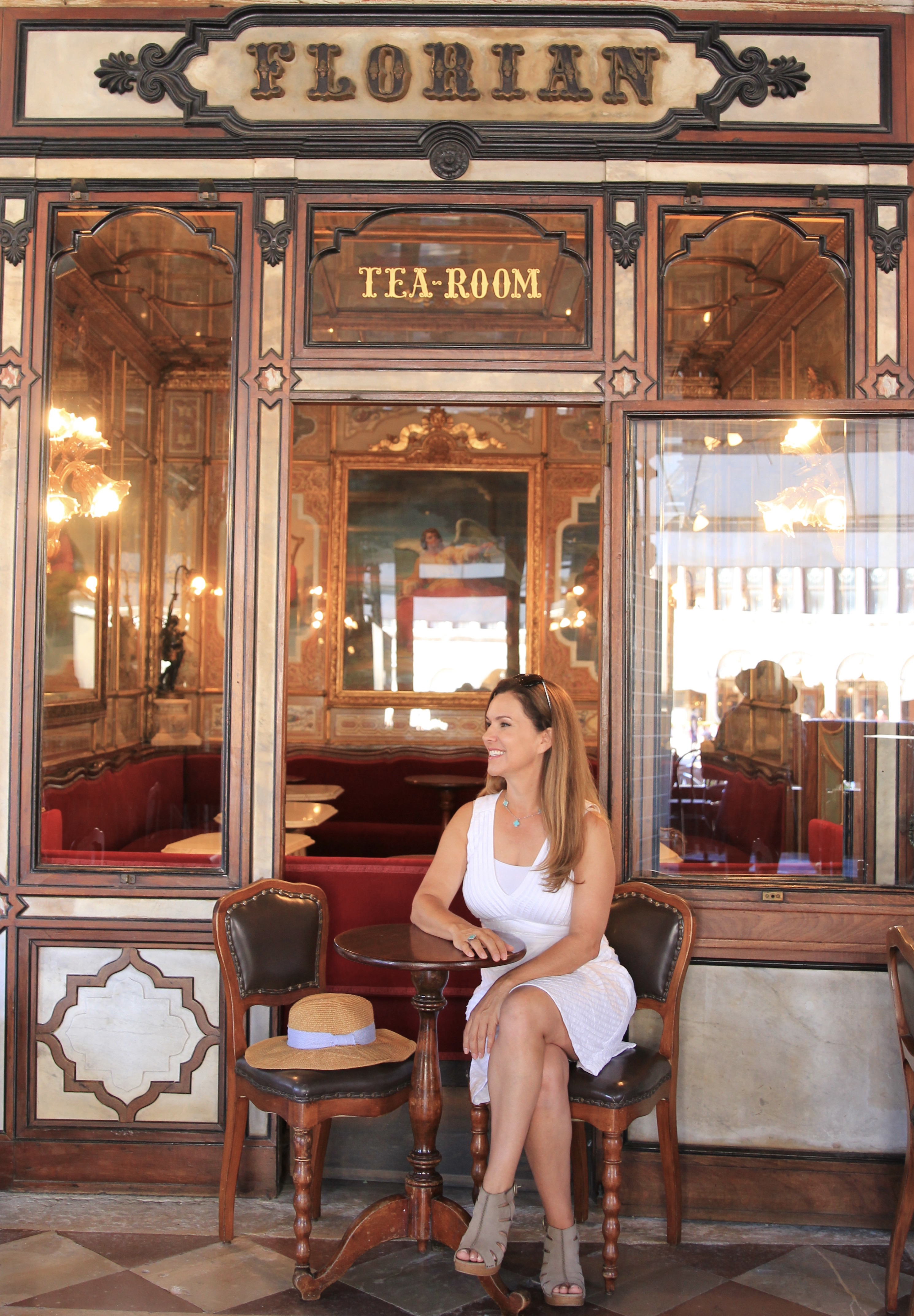
For as long as I can remember, I’ve been a coffee drinker. I started early, very early. So early in fact, I have no memory of a life before coffee. My Italian grandmother gave me my first taste of coffee and cream in a baby bottle. As a child, coffee became a part of my homeopathic treatment for allergies and asthma. As an adult, I’ve visited some of the world’s finest cafes including Florian’s in Venice, where coffee was first served in Europe, Café Sperl in Vienna, Austria, and the former monastery in Amalfi where a Capuchin monk created cappuccino.
Another reason to love Venice…coffee and it’s arrival in Europe started here at this coffee shop.
Spanning three centuries, Sant’Anna has stood as a source of learning, light, and leadership for the Sorrento community in the Campagna region of southern Italy. Located high above the Bay of Naples, jetting out on a cliff facing Mt. Vesuvius, Sorrento, sits 30 miles south of Naples. Now, through a new partnership with Jacksonville University, Sant’Anna is poised to become a leader in high quality global educational experiences.
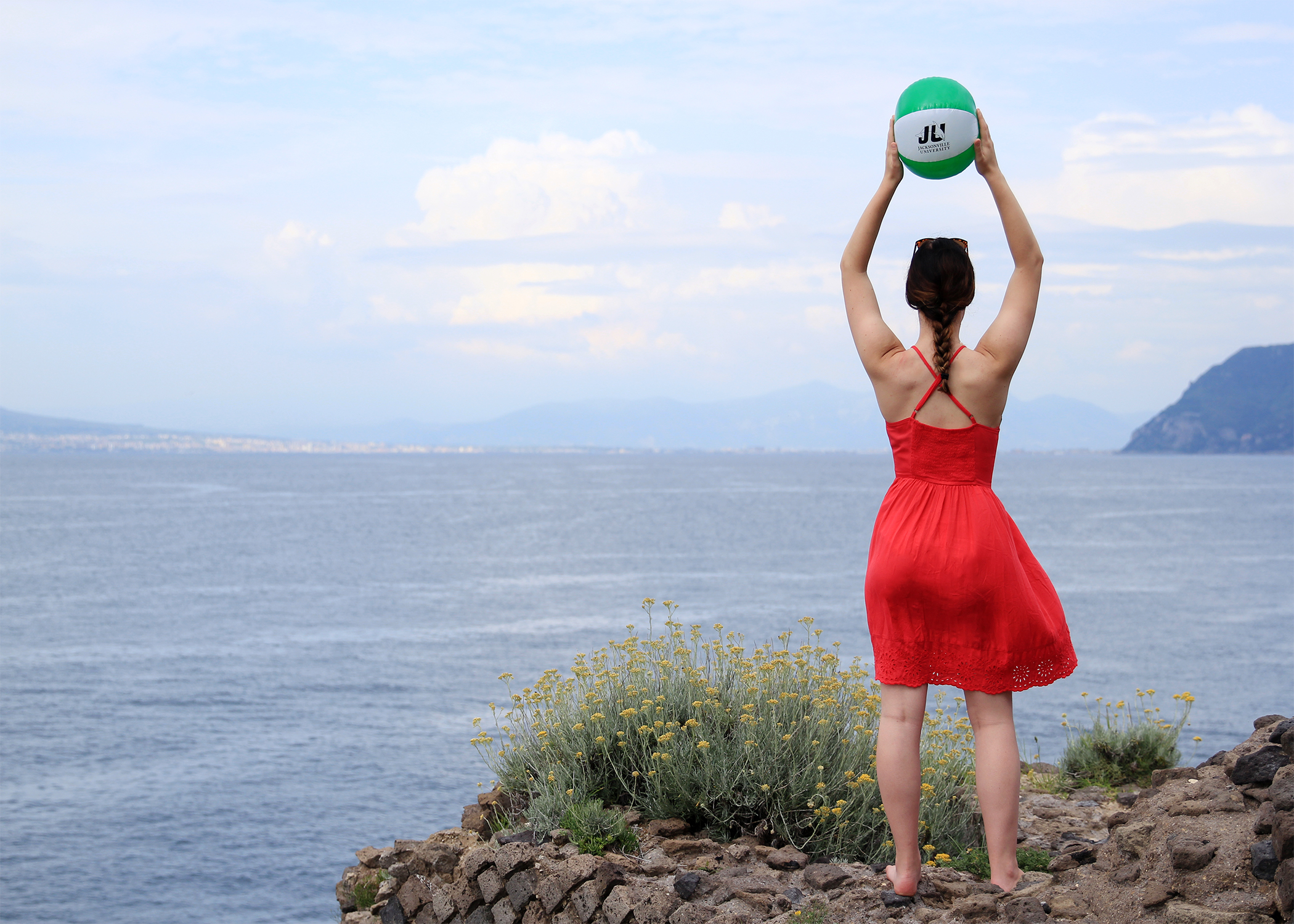
JU on the cliffs of Sorrento, Italy
LEGACY OF SANT’ANNA
The legacy of Sant’Anna is shrouded in generosity, compassion, and commitment to the educational needs of a community. The expansive property originated in the 1800s as a private residence. At the owner’s request upon his death, the estate was bequeathed to the Roman Catholic Church. In response for such generosity, the Church sent the Sisters of Charity of the Immaculate Conception of Ivrea to care for the educational needs of the Sorrento community.
For more than 150 years, the Sisters of Charity served the diverse educational needs of the Sorrento community; establishing an orphanage, teaching nursery school through high school, and educating teachers. The school closed its doors in 1994. A few years later, with permission from the Vatican, Cristiana Pannico, founder and President of today’s Sant’Anna Institute moved into the historical building, bringing new life, leadership, and learning yet again into the property. This time, with Pannico’s vision, expanding the legacy of learning to include international students.
Towering high above Marina Grand, Sant’Anna shines brightly.
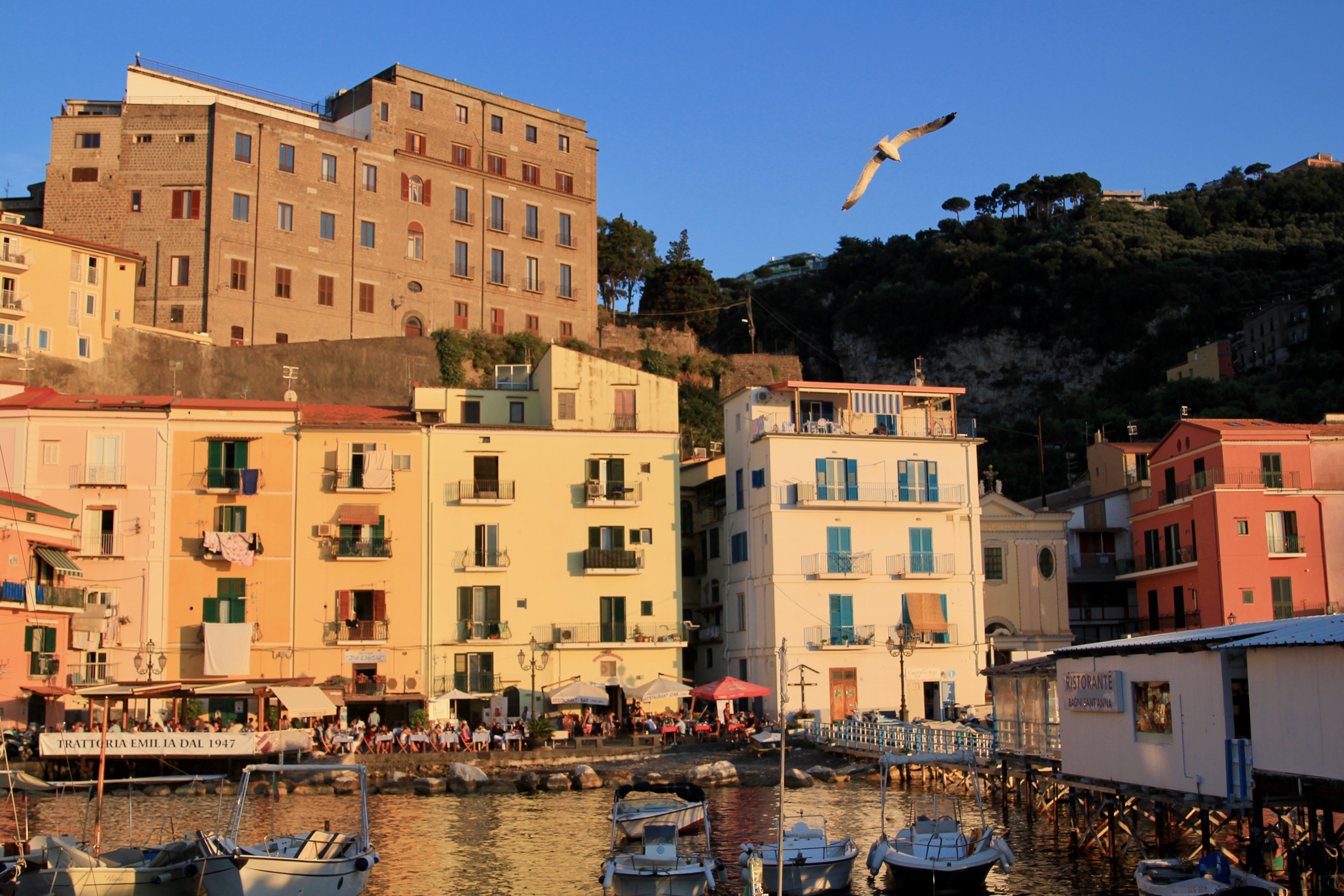
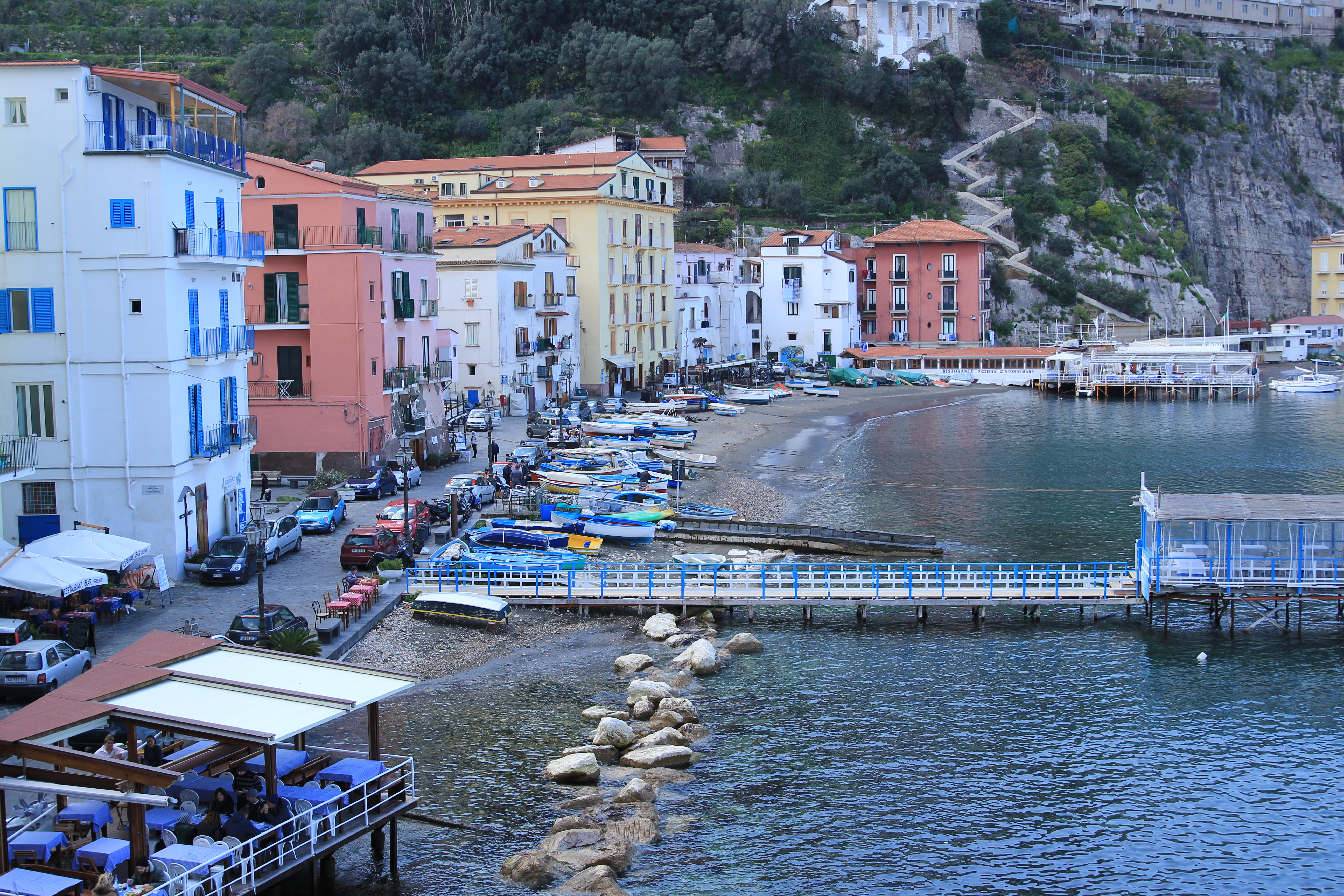
Today, towering over a majestic cliff, high above Sorrento’s Marina Grande, the impressive five-story building includes classrooms, offices, and two floors of newly renovated student residences. The rooms overlooking the sapphire blue waters of the Mediterranean Sea and pastel colored fishing village of Marina Grande are again bustling with activity.
The watercolored fishing village of Marina Grande.
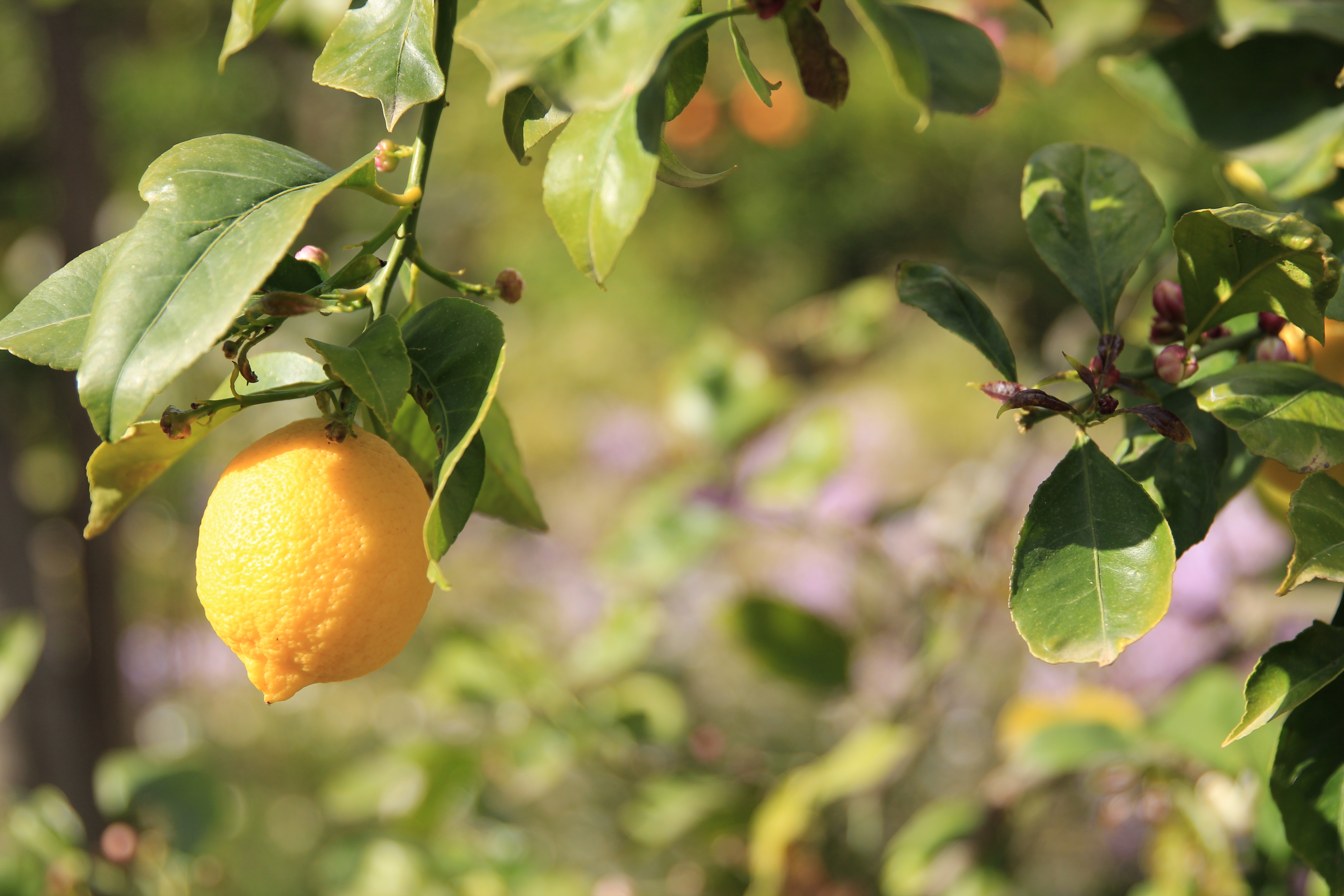
The stone-walled walkway leading through the gates of Sant’Anna delights the senses meandering through brightly colored gardens, rose-scented arch ways, and tidy rows of Sorrento’s native aromatic lemon trees. The organic garden is lovingly tended as it has been for centuries, providing fresh fruit, seasonal vegetables, and flowers to the Sant’Anna community.
Lemons and wisteria line the pathway to Sant’Anna.
MY LEAP OF FAITH
As the Executive Director of Global Teaching and Learning, and Professor of Communication, I’ve lead study abroad programs at JU for more than a decade and a half. I am a passionate advocate for quality study abroad programs. Time and again, I witness the transformation that takes place when a college student steps out of the familar and into the unknown. I believe education remains the one great hope for vibrant democracies throughout the world. For me, study abroad is an integral part of education, necessary to prepare students for life in an increasingly global community.
Villa Rufolo in nearby Ravello.
When done right, study abroad has the power to promote peace, replacing fear of the unknown with understanding, illuminating shared values, and cultivating respect for differences. Study abroad affords students the opportunity to experience engaged learning while increasing knowledge through understanding.
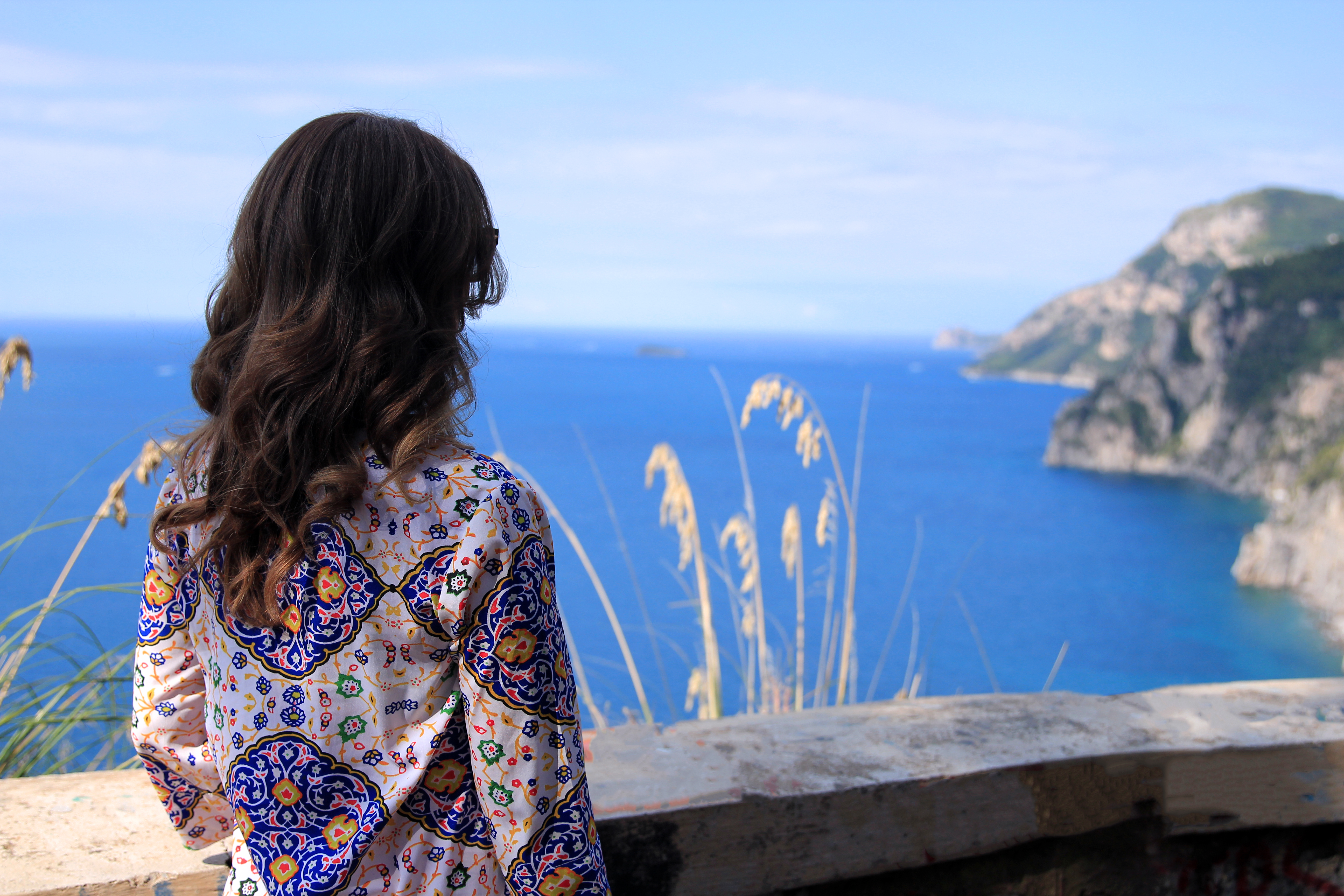
Enjoying the view along the Amalfi Coast.
My students have used their time abroad to produce award winning projects honored by the Florida Chapter of the Associated Press and the National Council for Undergraduate Research. During the Summer of 2017, at the end of a family vacation in Venice, I made a last-minute decision to stay behind, and travel alone for the nearly 500 miles south to Sorrento.
After a few minutes on the property, and an initial meeting with owner, Cristina Pannico, I recognized the opportunities for collaboration between JU and Sant’Anna could be far greater than simply my summer program. I knew I found something extraordinary and set to work to share it with the JU community.
This view was waiting for me upon my arrival at Sant’Anna.
In the fall of 2017, Pannico visited JU, touring the campus and meeting with President Tim Cost. In March of 2018, I travelled to Sorrento, and spent my sabbatical at Sant’Anna studying Italian and facilitating the partnership. Later that month, Dr. Christine Sapienza arrived with the documents making the collaboration between Jacksonville University and Sant’Anna official.
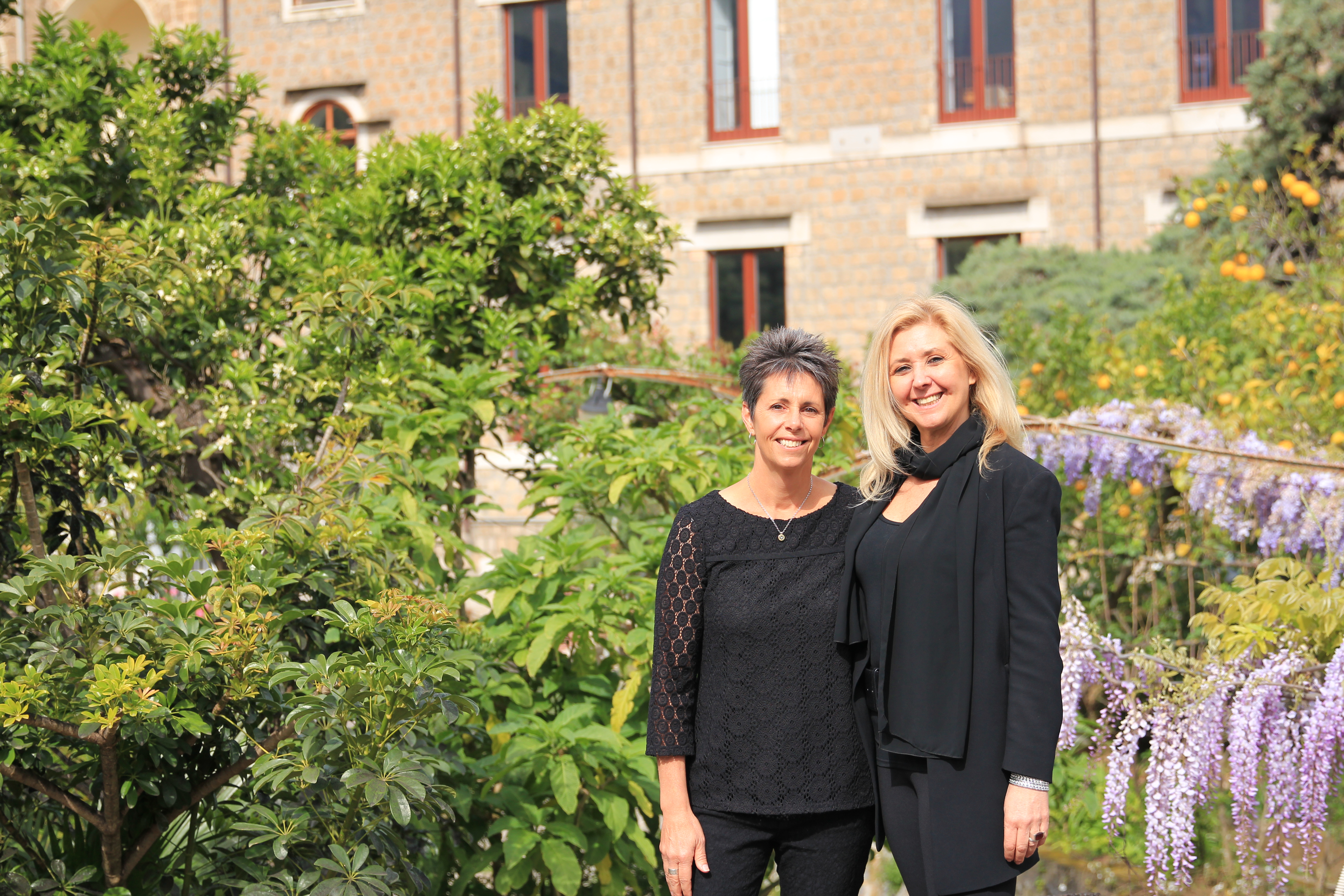
Dr. Christine Sapienza, Provost and SVP of Academic Affairs at Jacksonville University with Cristiana Panicco, Owner and Founder of the Sant’Anna Institute.
As the university of record, JU oversees the instruction and coursework provided at Sant’Anna, ensures JU academic standards are maintained, and awards university credits and transcripts to all students throughout the world earning academic credit through Sant’Anna classes.
DOLPHINS IN SORRENTO
In May of 2018, less than one year after the initial meeting between Pannico and myself, the first group of JU Dolphins arrived in Sorrento. The three-week May-mester included two courses. I taught Communications, Culture, and the Amalfi Coast, and Professor Ginger Sheridan taught Photography: The study of Displacement and Discovery.
Enjoying the golden light in Sorrento with my students Sylvia Dean, Class of 2019 and Sara Ann Wicks, Class of 2018
A second group of students followed in June, completing course work, including Sant’Anna signature courses: History of the Mafia, Archaeology and the Cities of Fire, and Italian Language. In addition, the summer program featured a new JU International Internship in Sorrento, with students from a variety of majors interning in the community while earning discipline specific academic credits.
History of the Mafia students travel to Naples with Dr. Aterrano and Dr. Novellino.
Over the course of the next academic year, JU will continue to pilot new programs. These additions include graduate and undergraduate courses in Health Sciences, International Internships, two Summer Sessions, the Freshman Welcome Program, and full semester programs in the Spring and Fall.
This extraordinary partnership provides undergraduates, graduate students, and the greater JU community with well-organized and innovative engaged learning opportunities. Collectively, this JU signature program pairs critical thinking and vibrant learning experiences while preparing students for success in an increasing global world. From the bluff high above the St. Johns River to the cliffs of the Sorrentine peninsula, JU’s shared commitment to educational excellence, through service, learning, and leadership has found a new home in Sant’Anna and Sorrento, Italy.
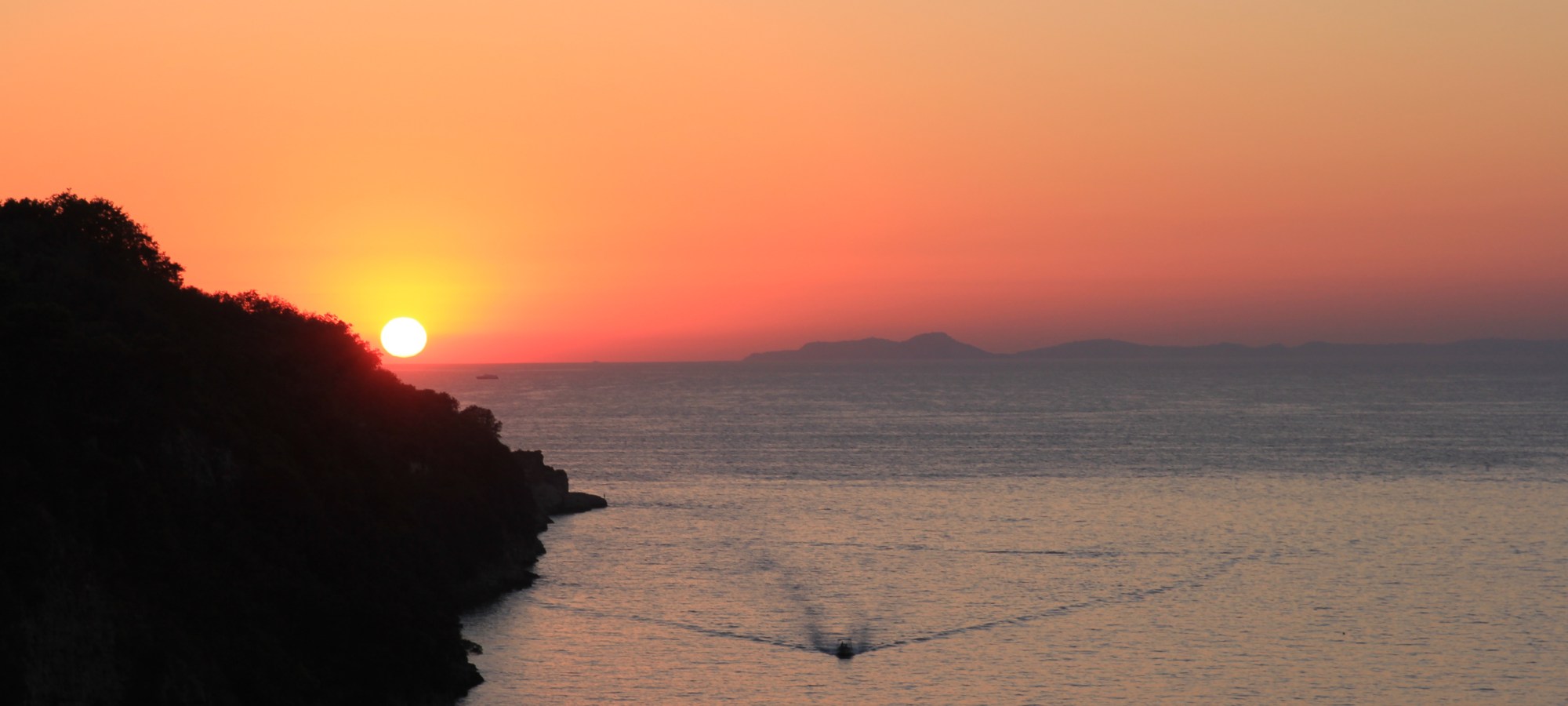
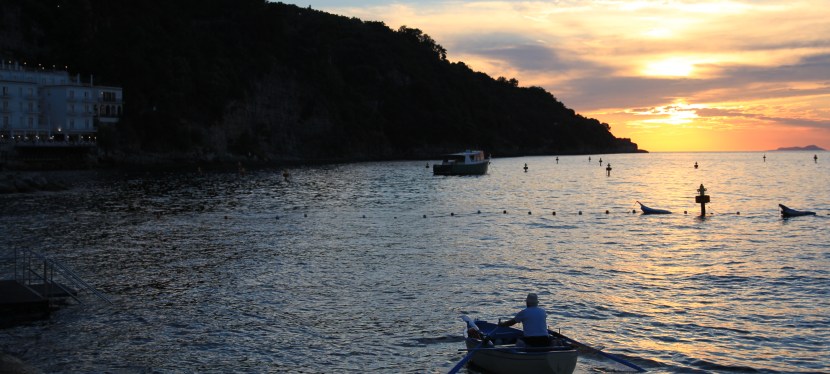
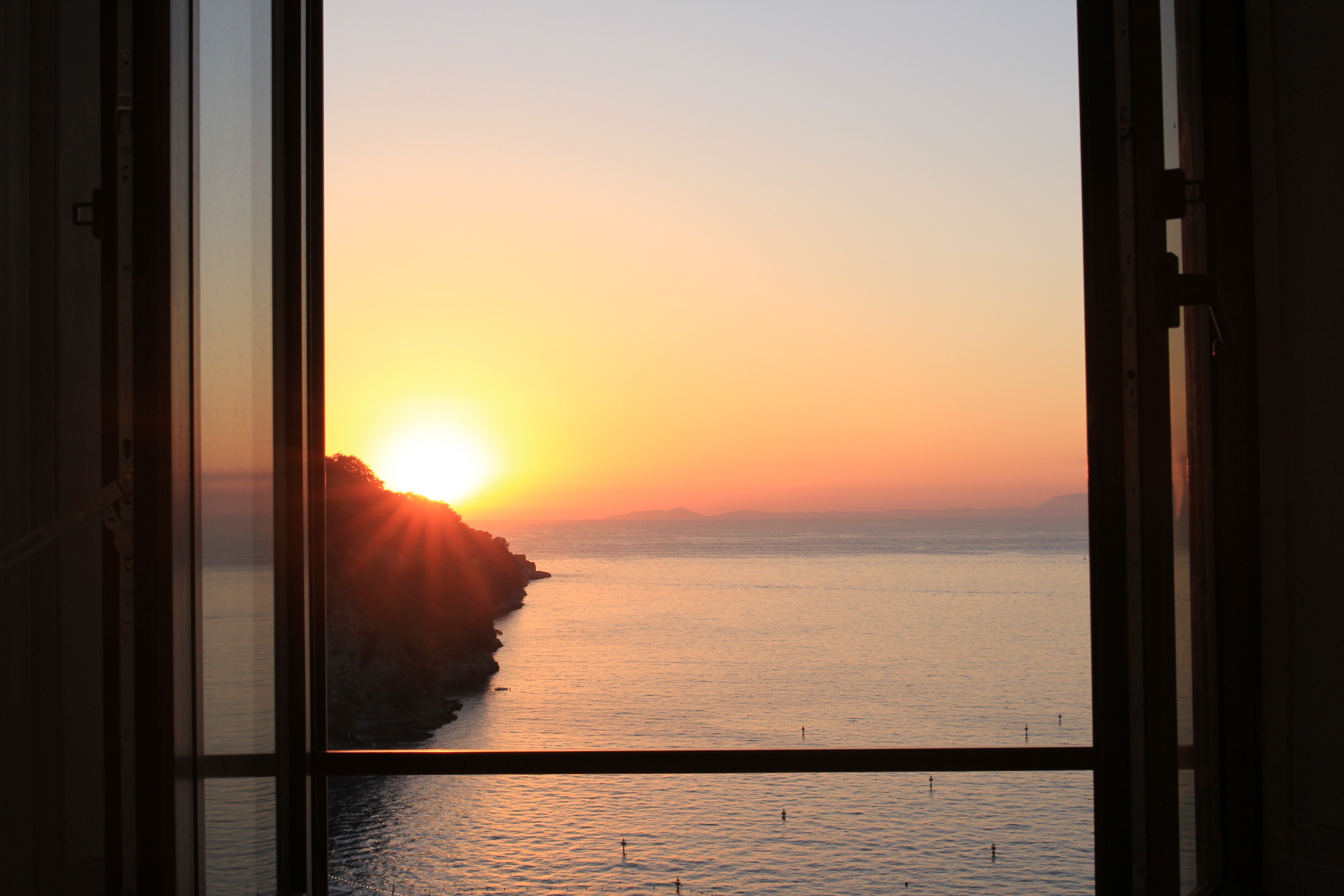
Sunset in Sorrento and Marina Grande.
The study abroad programs are open to JU students and full time college students in good standing enrolled at other colleges and universities. For more information about how you can study abroad in Sorrento, click the link here.
Over the course of the last year, including during my sabbatical, I spent much of my time working on a project designed to create innovative, engaging, and educational study abroad opportunities. This summer, the program came to life as I welcomed several groups of students to the Jacksonville University and Sant’Anna partnership.
Now you can travel with me and my students through the majestic cliffs of Sorrento, the breathtaking Amalfi Coast, and set sail for captivating Capri. With signature coursework including International internships these global experiences bring education to life while offering a whole new world of understanding.
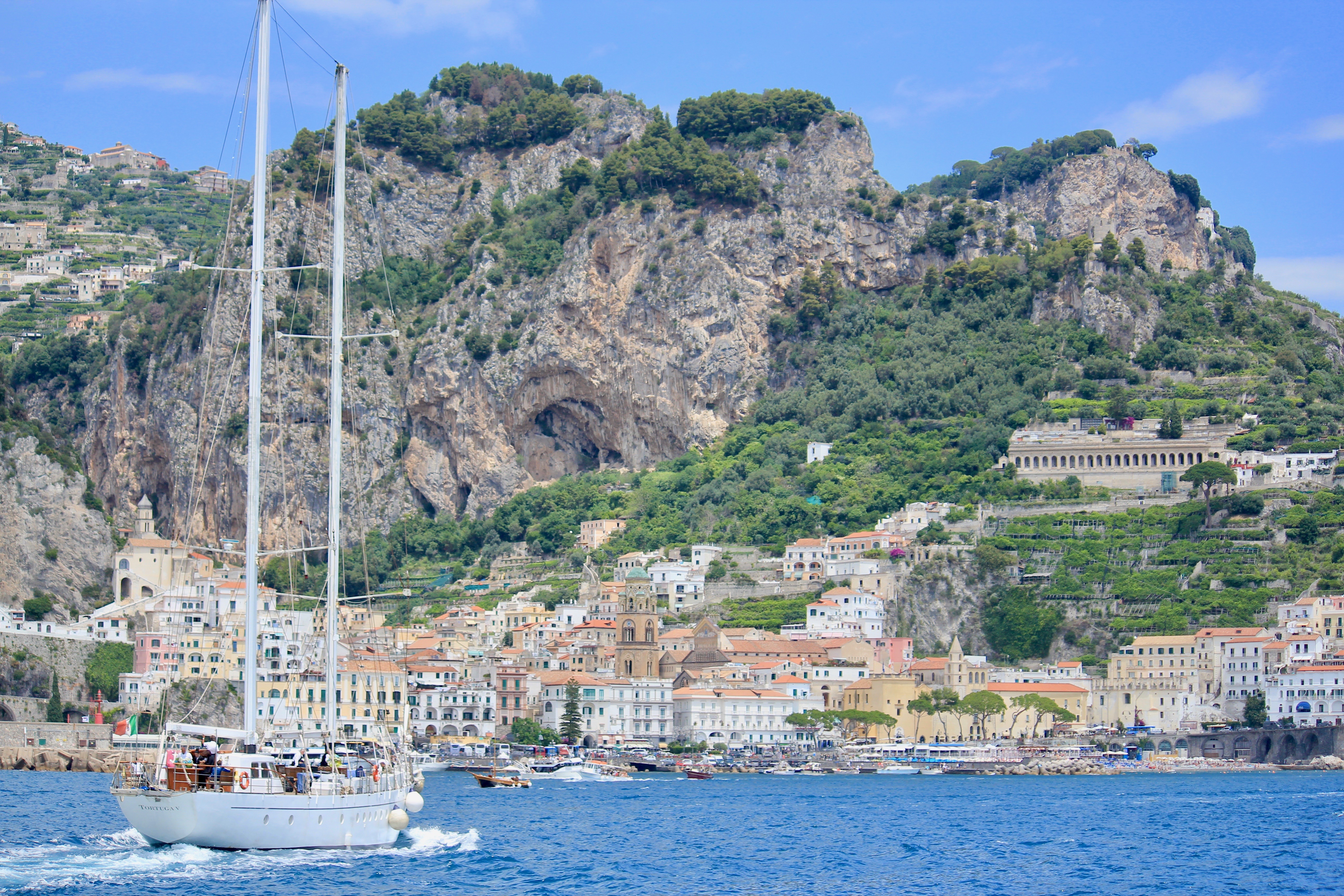
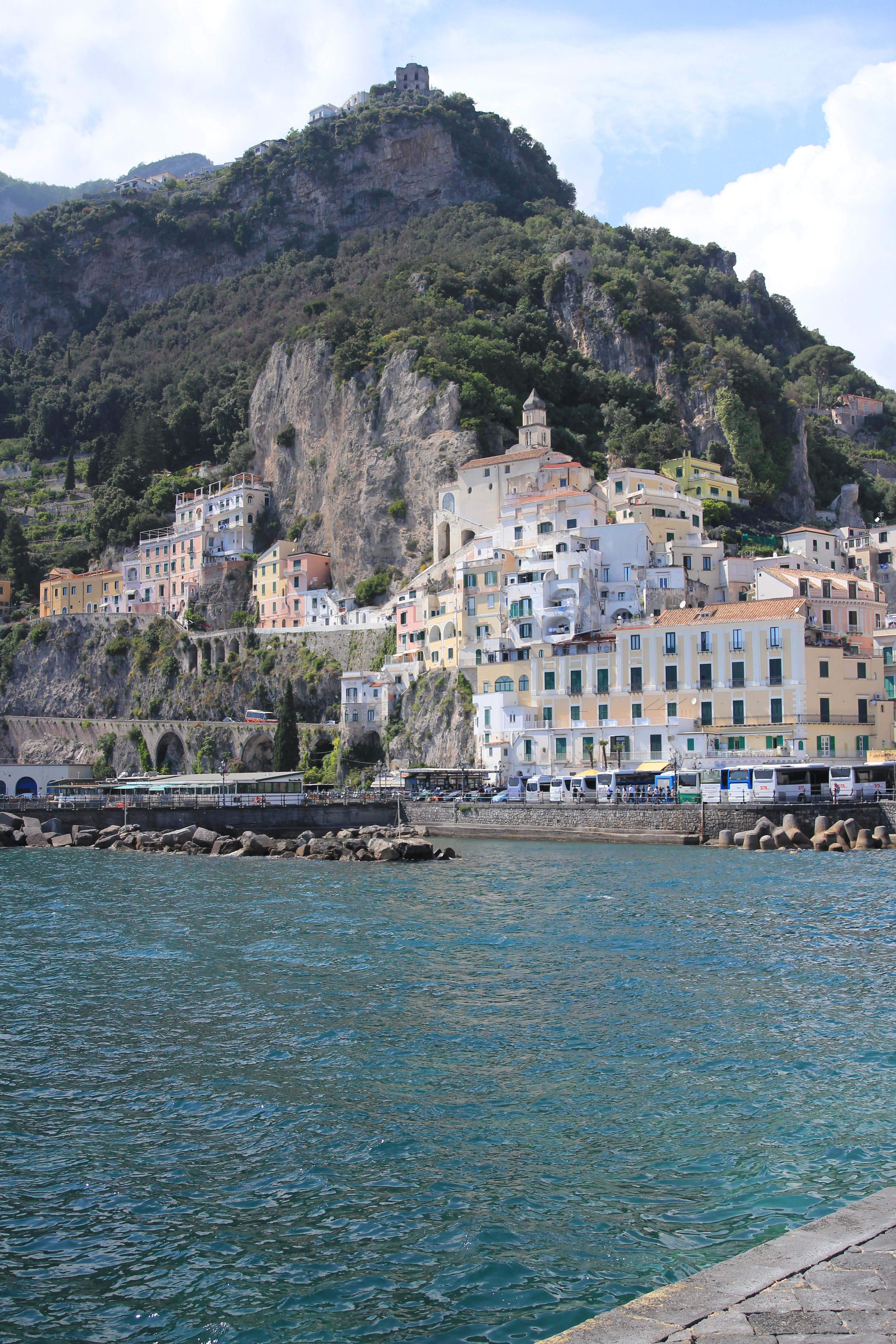
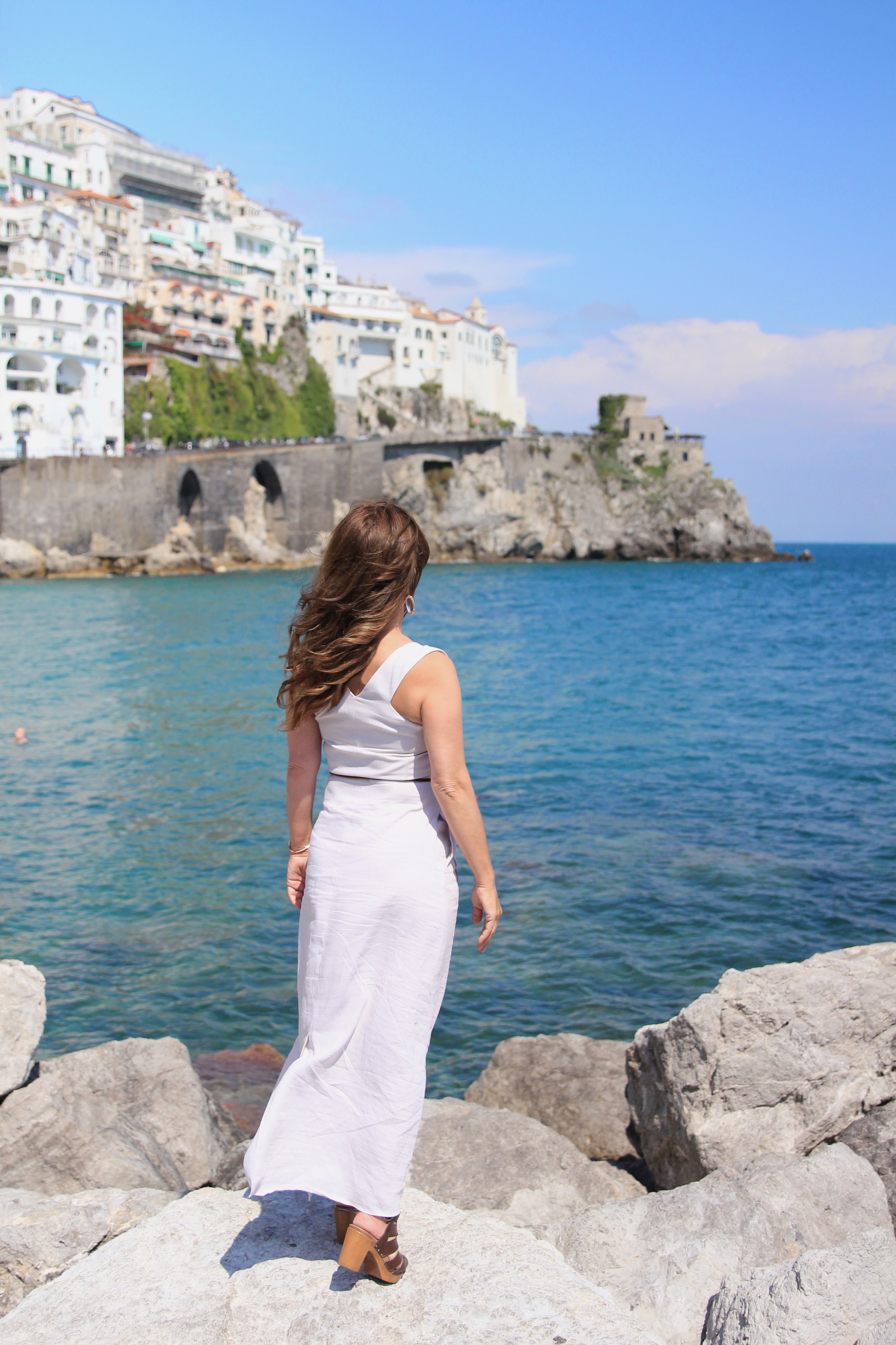
The town of Amalfi lends its name to the impossibly steep and beautifully blue 30 mile area known the world over as the Amalfi Coast.
The city that gave its name to Italy’s most famous coast.
Amalfi was the original Italian Naval superpower. During the 11th and 12th centuries, the Maritime Republic of Amalfi was rich and powerful, controlling the important sea-faring trade routes of the Mediterranean and North Africa. While the rest of the Italian peninsula was still bartering, Amalfi was minting its own gold coins and trading throughout the Mediterranean.
Views, vistas, and the sea
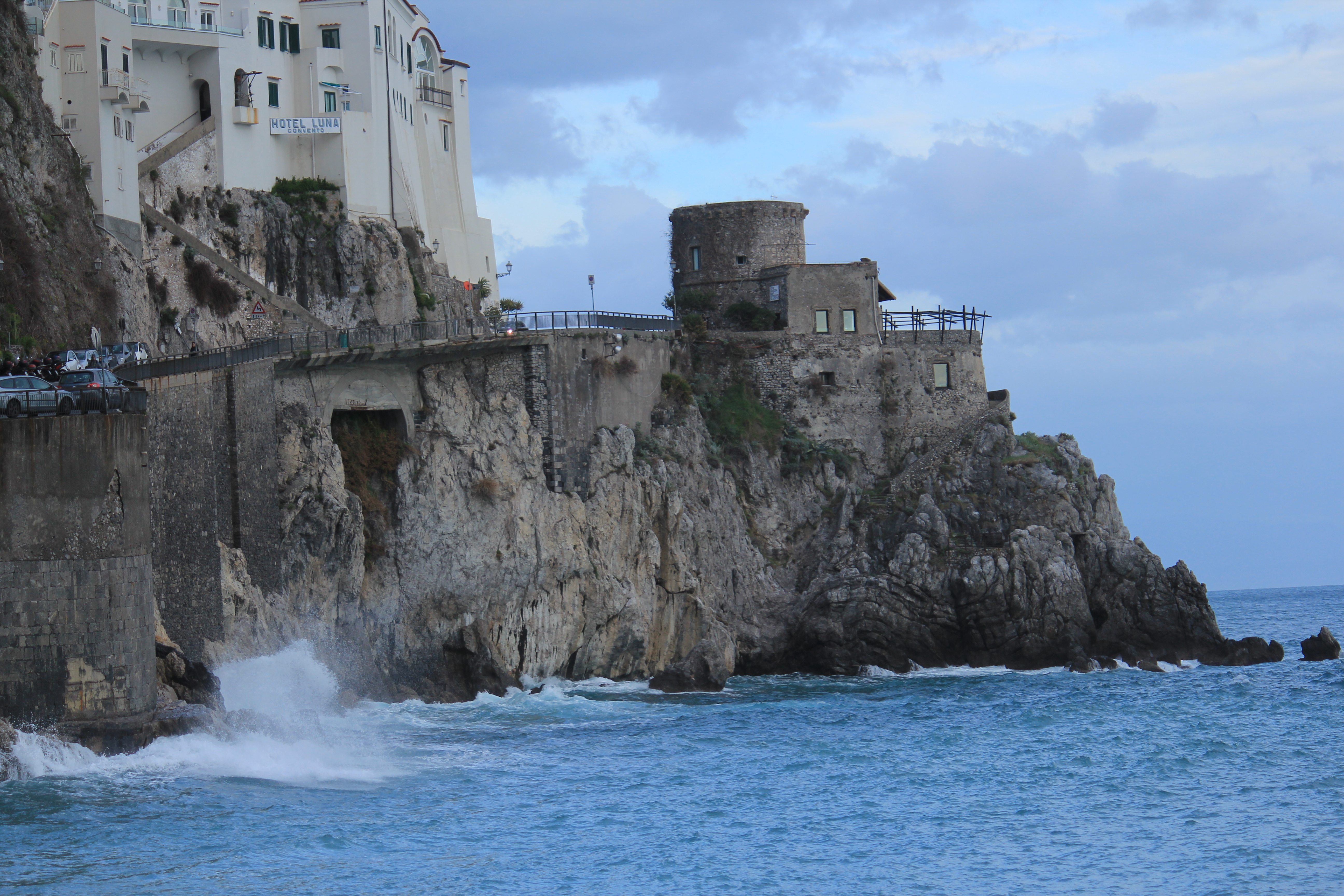
The Watch Towers of Amalfi still stand today.
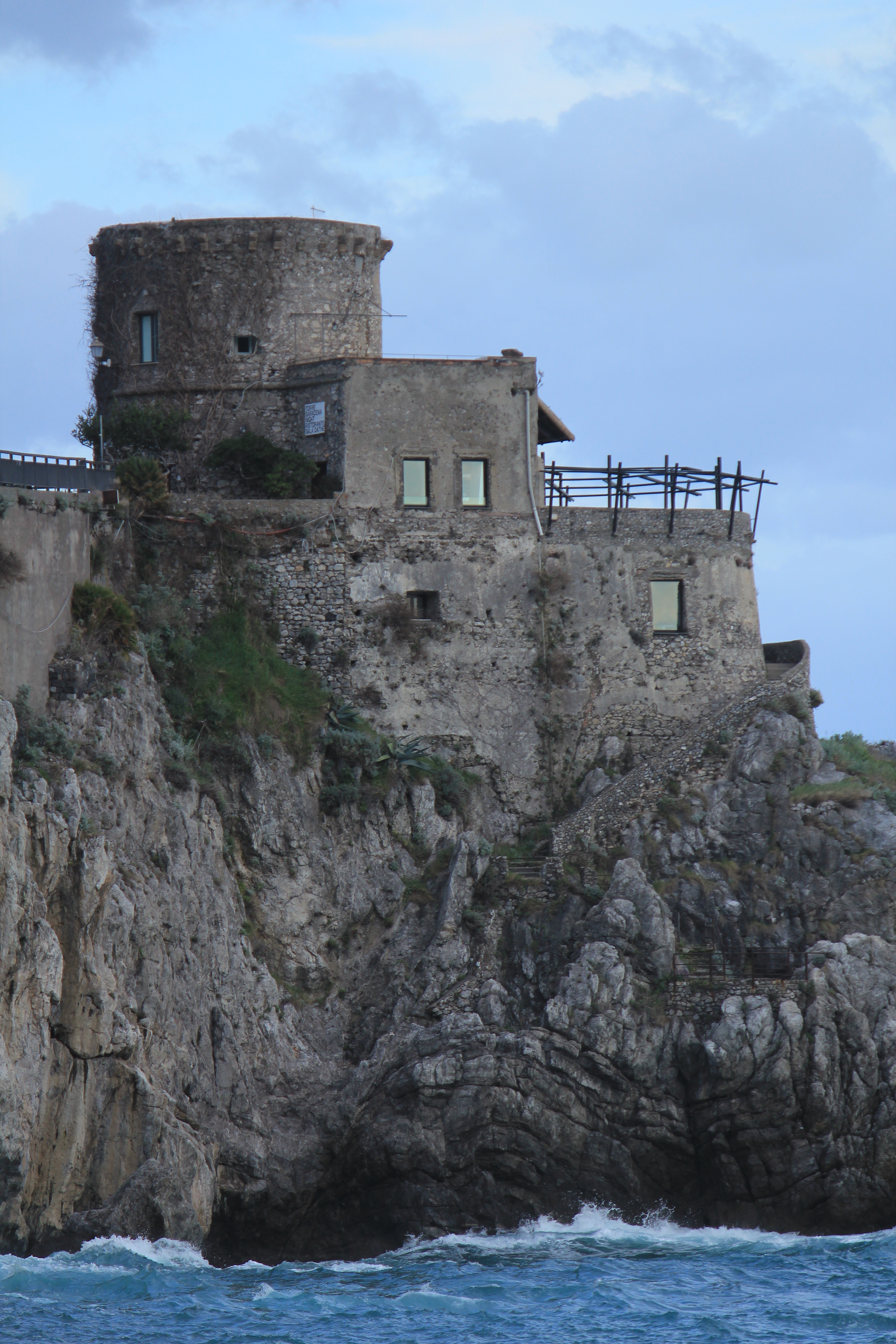
3. Throughout the famous Amalfi Coast you’ll find a series of strategic watch towers. The tower system was designed to keep a watchful eye on the sea and help keep residents safe. Pirate like invaders plagued this area of Italy for centuries. Secret codes and a fire burning on top of the tower warned the community to seek shelter and flee into the mountains before the invaders arrived. Today the towers still stand, including some that are now private homes and rentals.
Strategic watchtowers like this one, still stand throughout the entire Amalfi Coast.
Amalfi’s watchtower
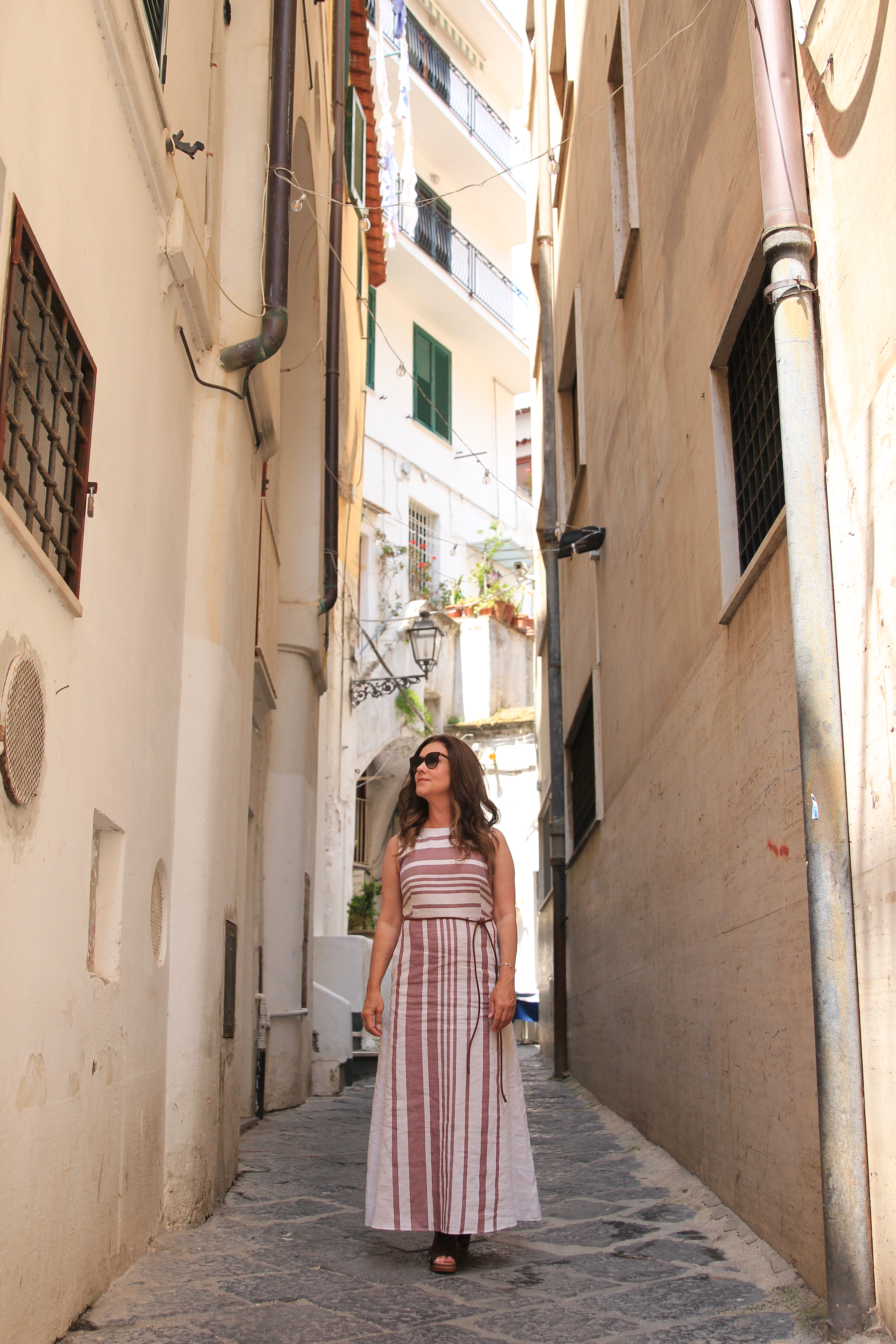
4. Despite its close proximity to Naples and the Sorrentine Peninsula, Amalfi feels like another world–in part because of its successful trade throughout the Mediterranean. Trade helped make Amalfi rich and left an indelible mark on this coastal region of Italy. You can still see the influence today as you walk the streets lined with the pockets of Arab-Sicilian architecture. The domed white washed buildings, narrow passage ways, and covered walkways are all borrowed techniques compliments of Greece and North Africa.
Narrow passages designed to create shade run throughout Amalfi.
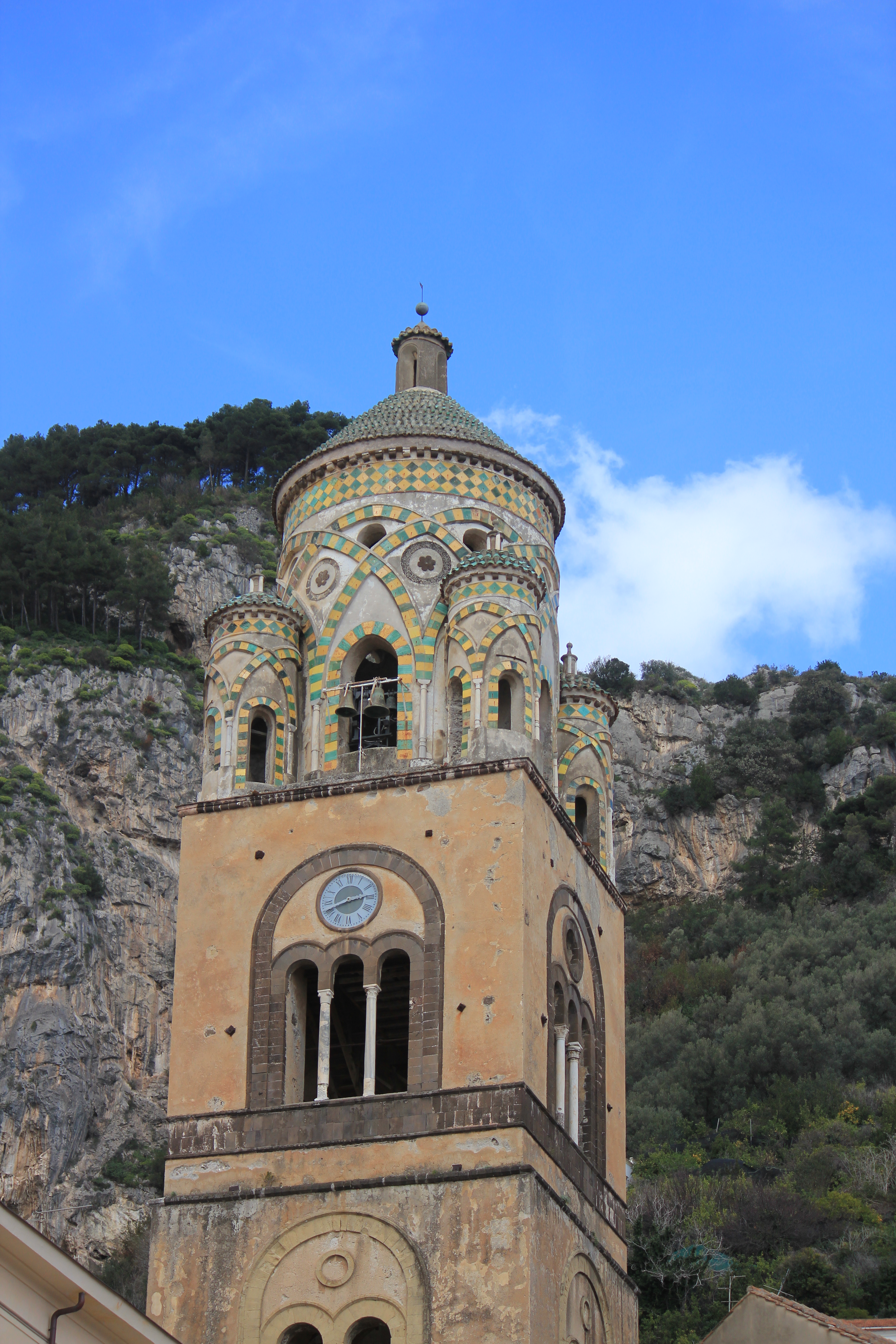
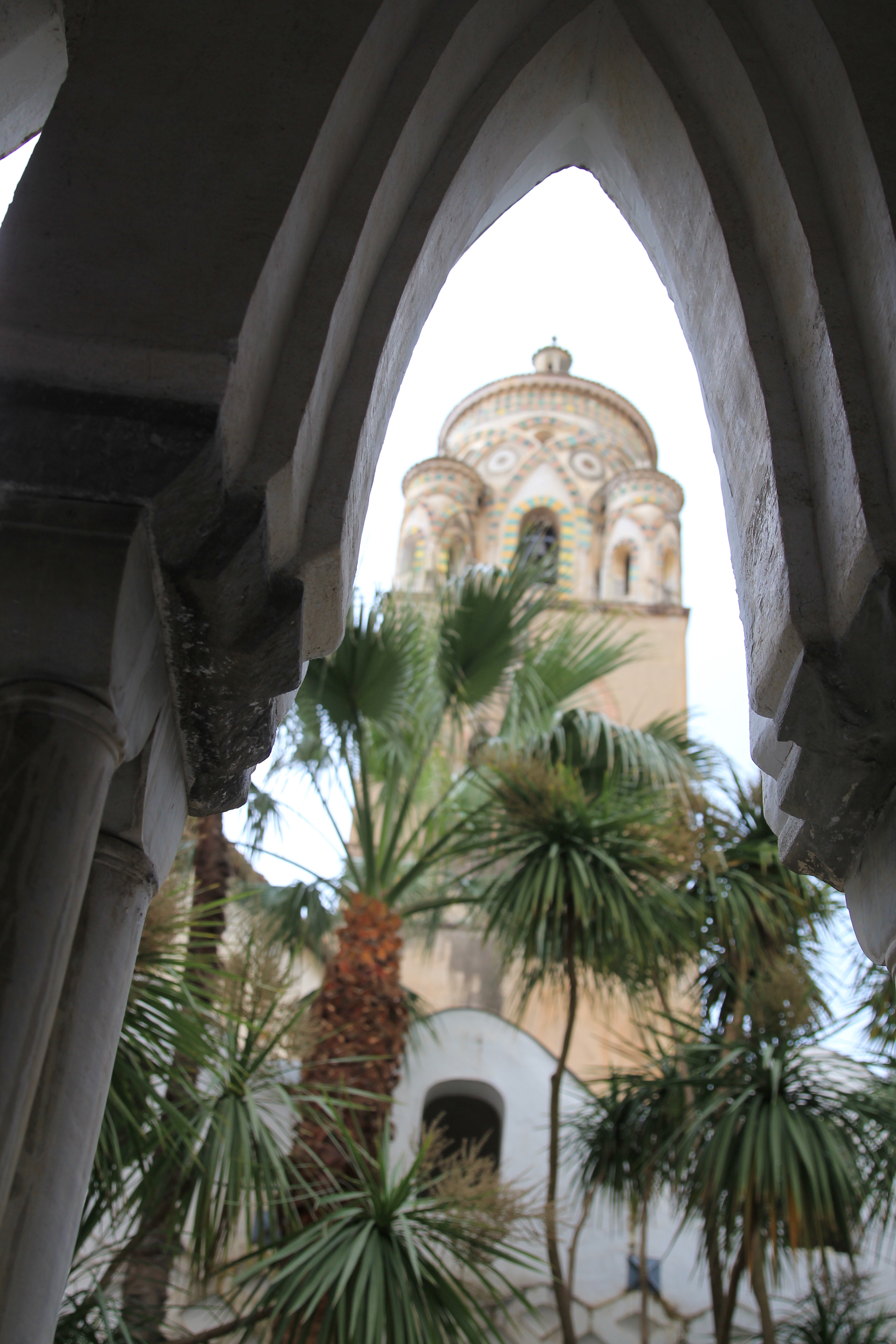
The bell tower of Amalfi features majolica tiles
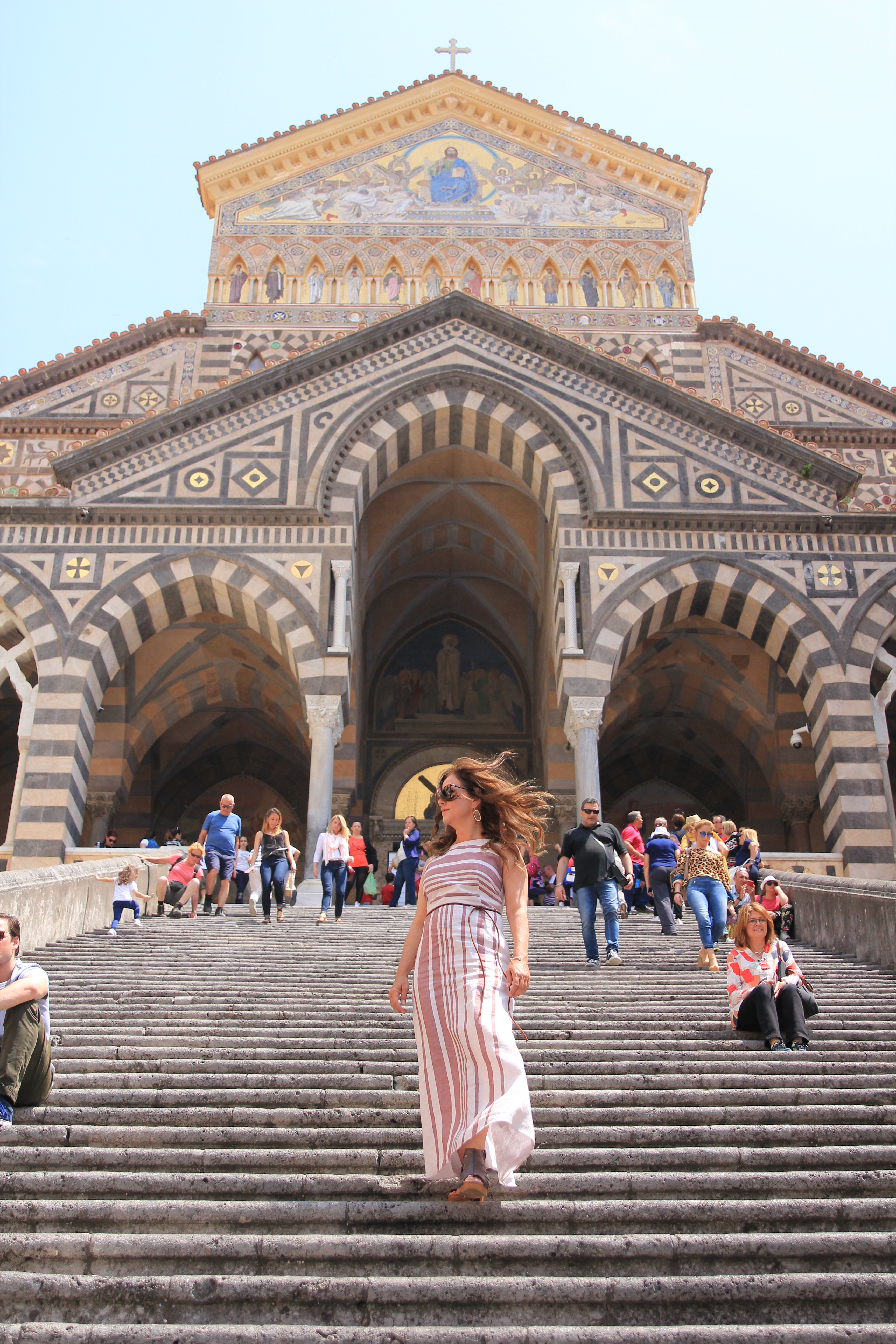
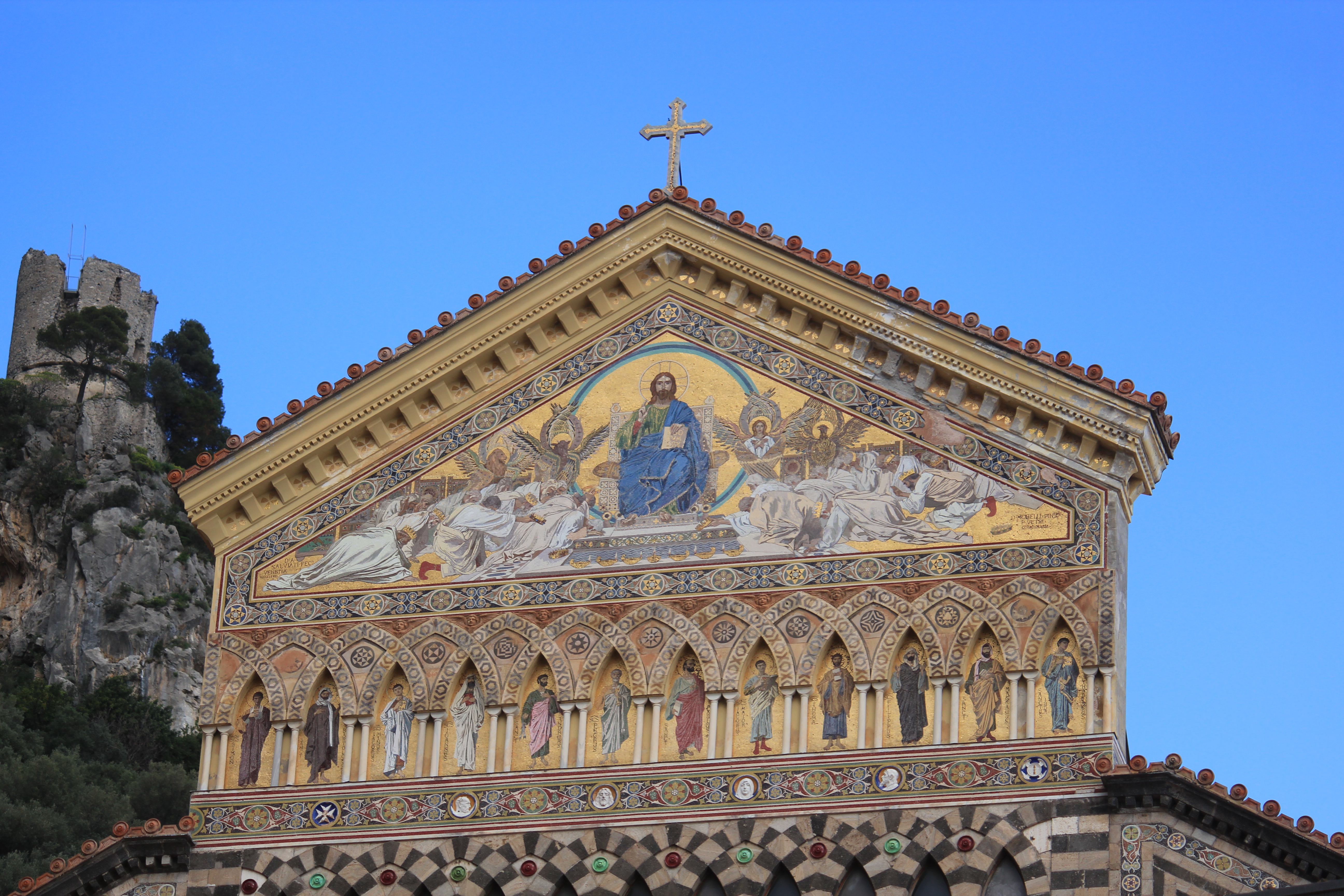
5. For many travelers, it is the highly recognizable Duomo of Sant’Andrea that defines Amalfi. Here too, you’ll see the influence of other cultures throughout the region. Standing as a glistening testament to Amalfi’s rich past, the Duomo of Sant’ Andrea dates back to the 9th century (with additions and changes throughout the centuries). The highly recognizable striped façade is the most recent addition to the cathedral and was completed in the 19th century.
Blown away by Amalfi and the Duomo
The “new” part of the Duomo was completed in the 19th century.
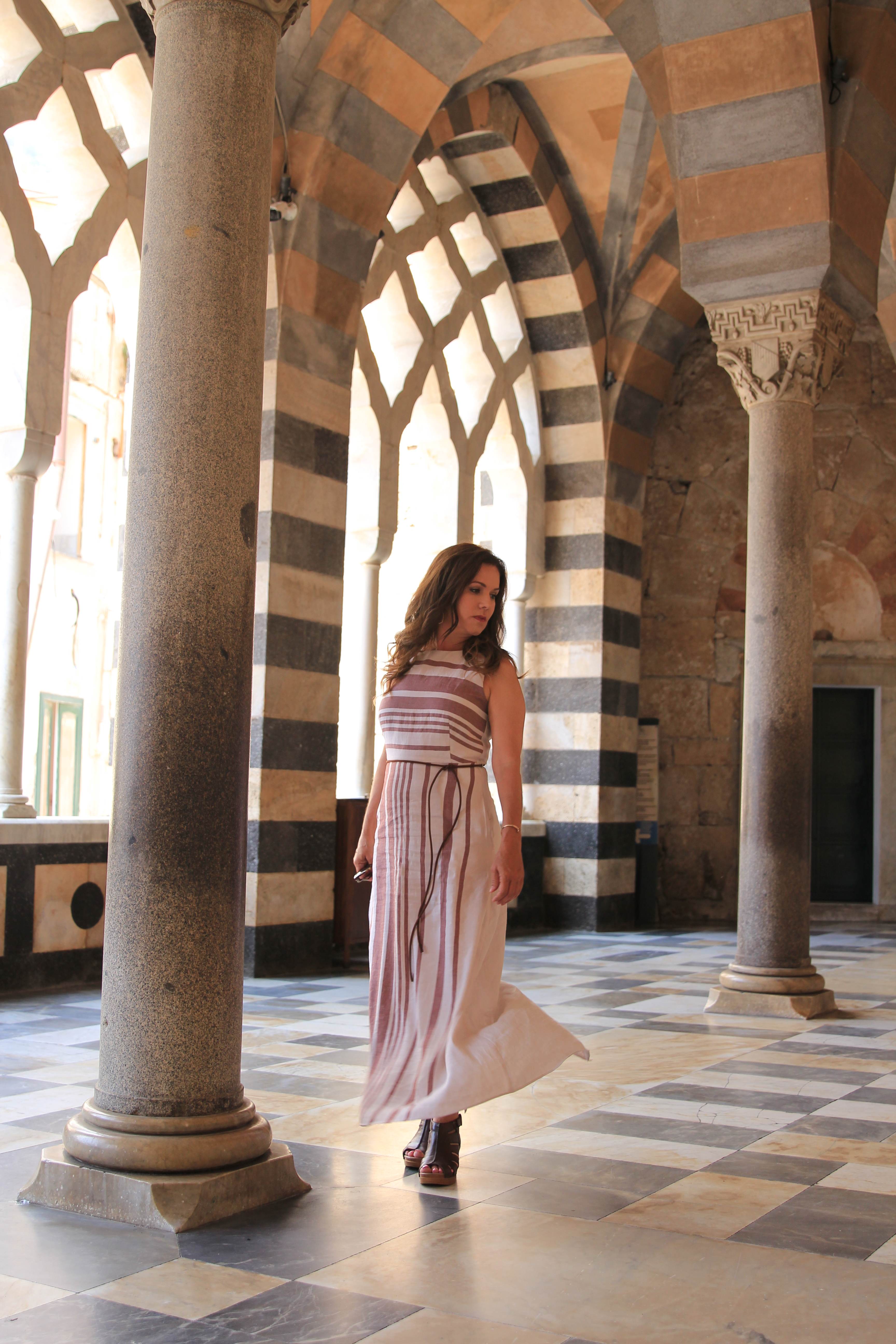
At the top of the stairs before you enter the cathedral, this beautiful breezeway awaits.
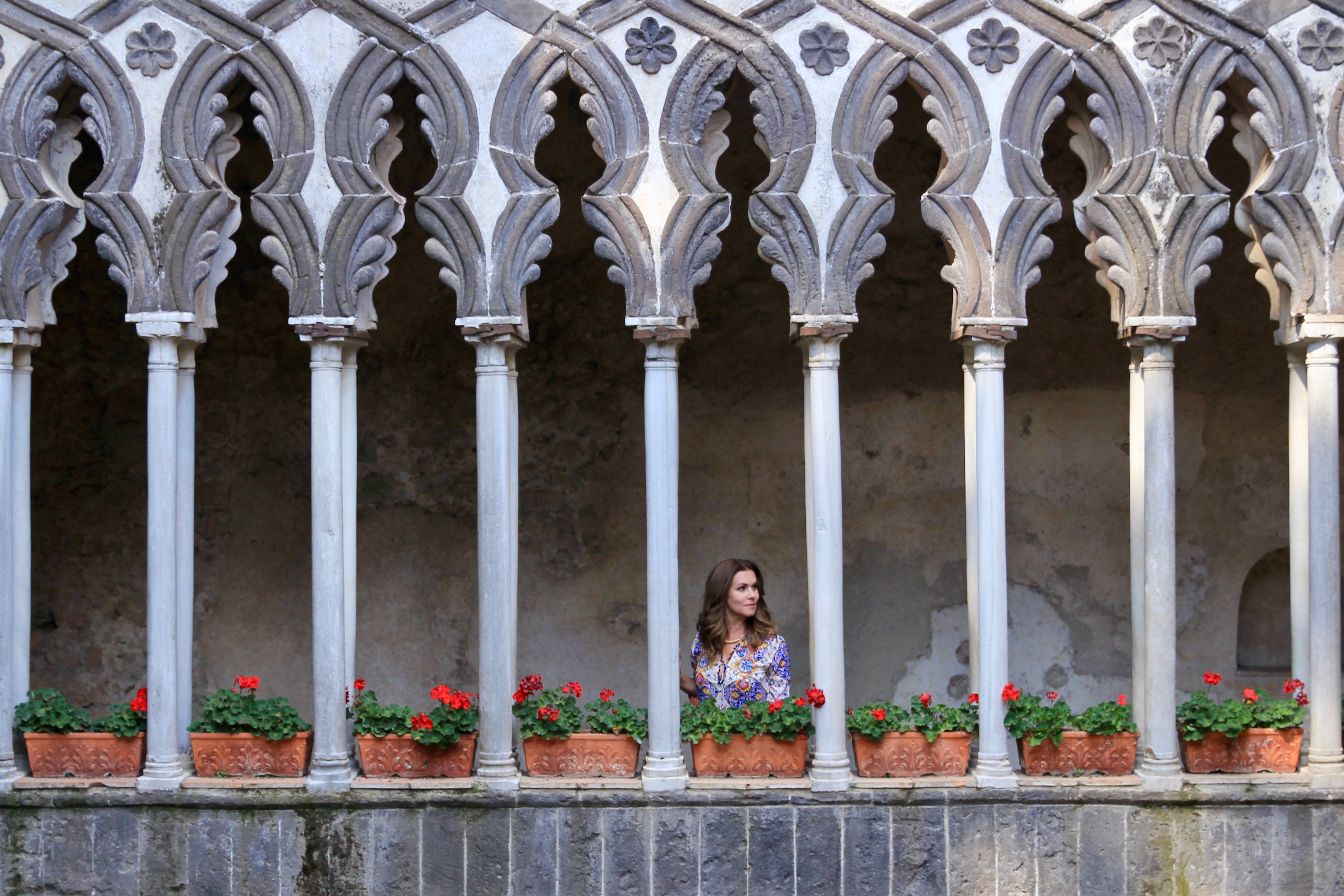
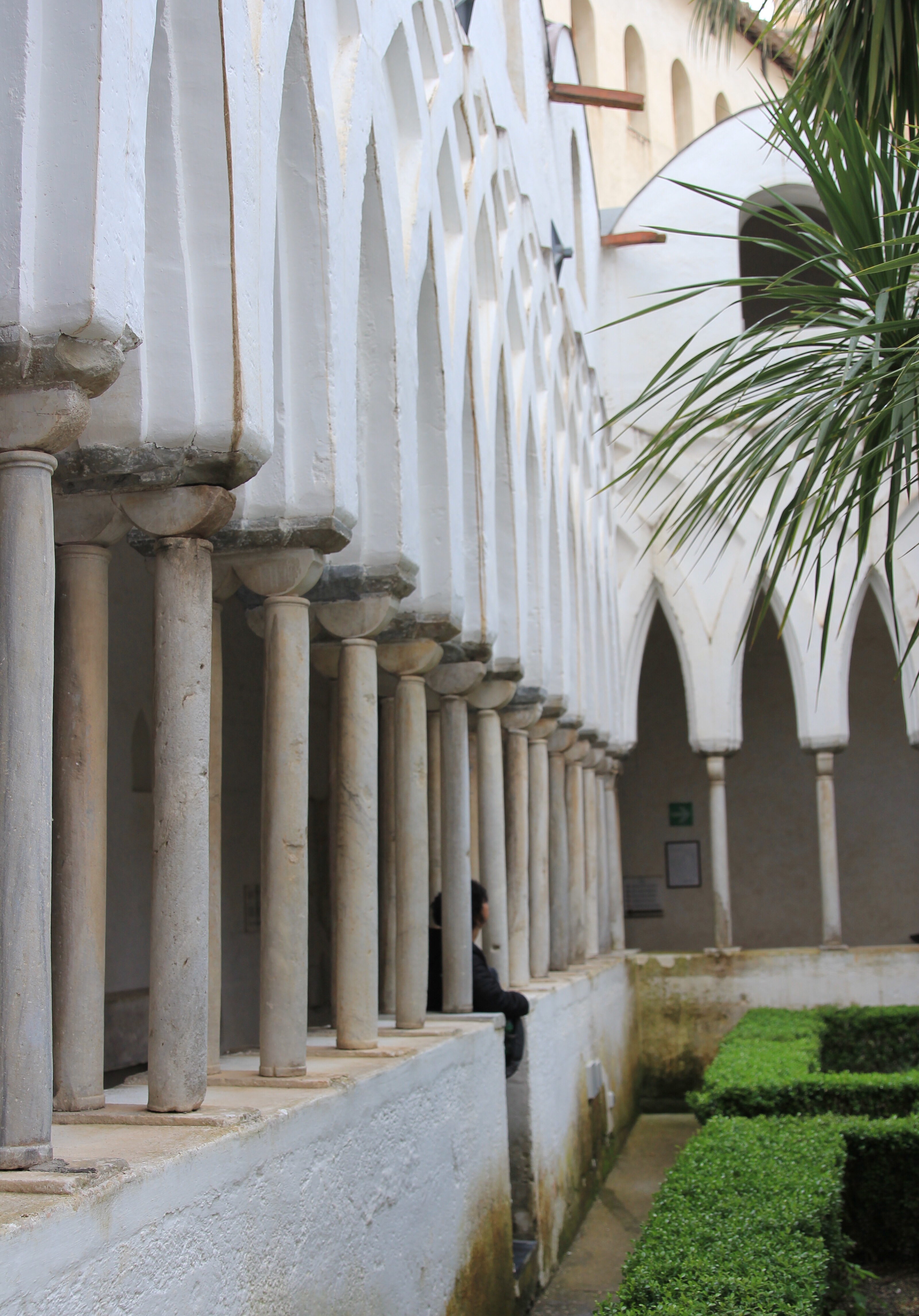
6. Climb the stairs and walk through the breeze way to entry the Chiostro del Paradiso. Here you’ll find interlaced Romanesque arches and 120 columns. Completed in 1268 the Chiostro del Paradiso was a final resting place for the cities elite. Considered one of the most interesting structures on the Amalfi Coast, the Chiostro del Paradiso features a four-sided portico with cross vaults, pointed arches, twin columns and woven arches rich with Moorish influence.
Majolica tiles grace Amalfi’s bell tower.
The Moorish style cloister in the corner of Duomo.
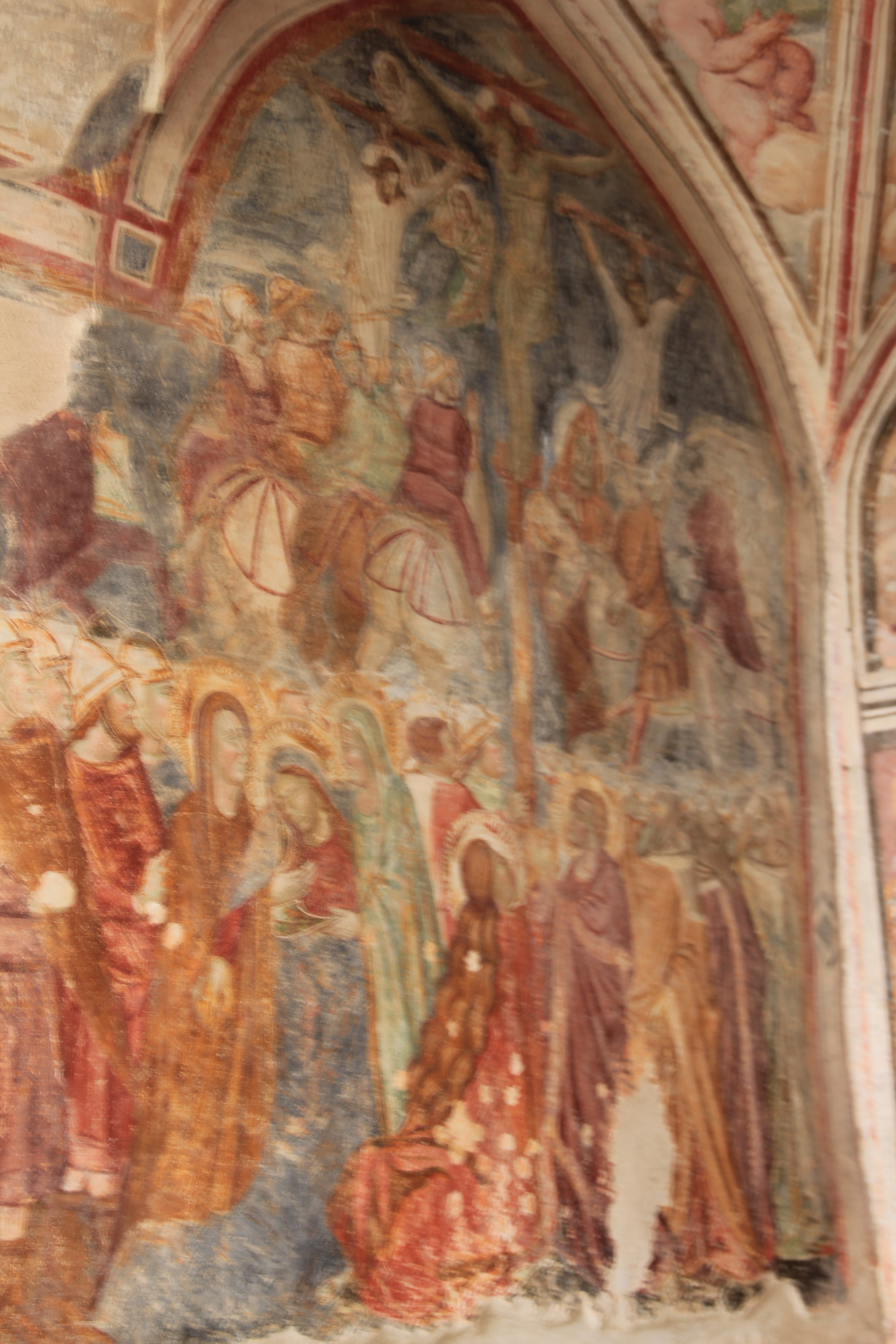
7. There are many beautiful details throughout the cloister and sometimes the stories they tell are fascinating–like this one in the corner of the portico. Here you’ll find a painting completed by a student of Giotto. You may recognize similarities between the beautiful blues and those of the magnificent Chapelle Scrovegni in Padua. The painting is unsigned, and no one can say for certain who the artist is. However, there may be another reason why this painter remained anonymous. The artist, who clearly was not a fan of the French Anjou rulers of Naples, took artistic license with his work. Look closely and you’ll see the soldiers responsible for the crucifixion of Jesus Christ in this painting are not Roman, but French Anjou!
Re-writing history and making a political statement.
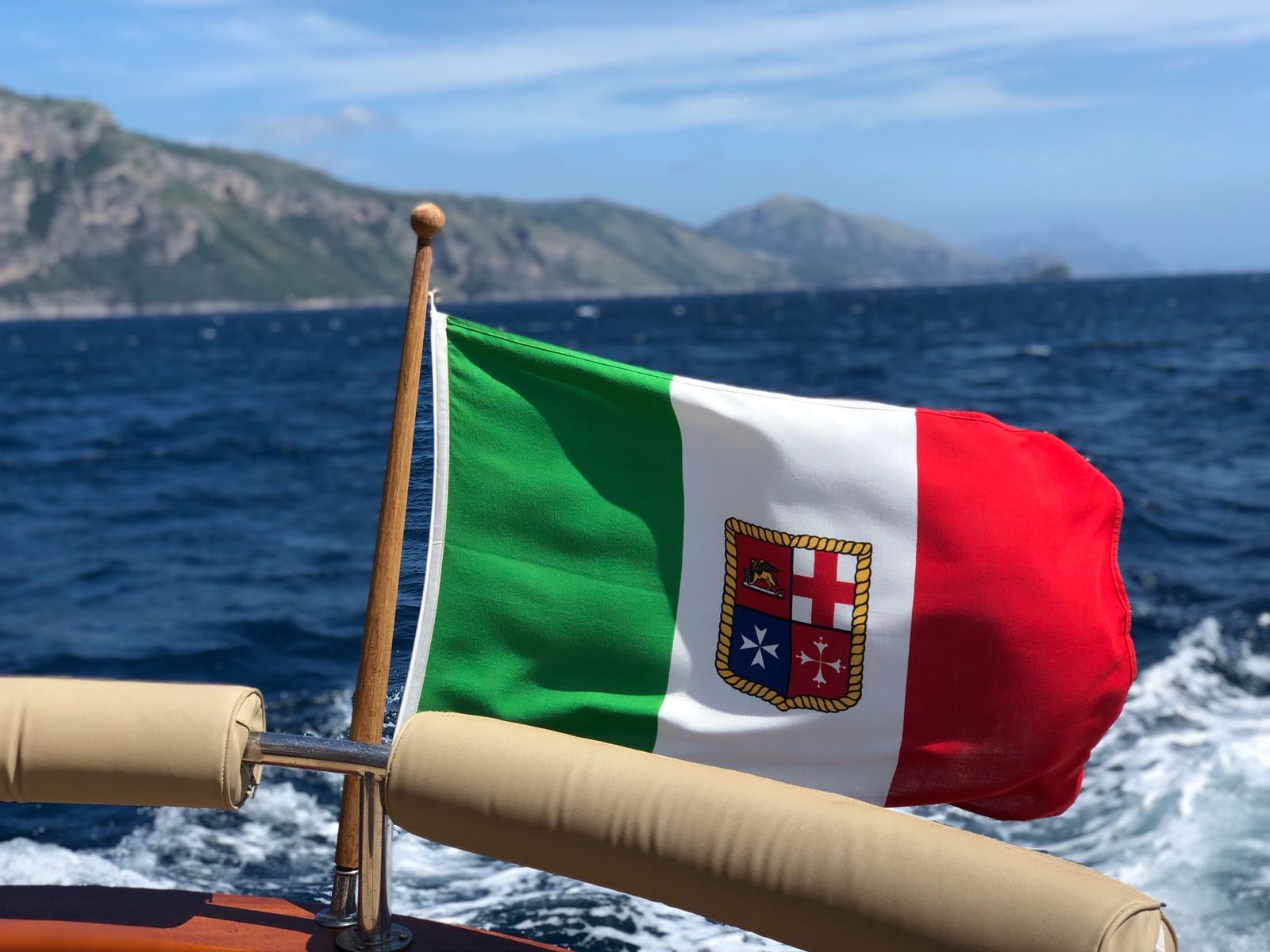
8. For centuries, Amalfi was powerful, wealthy, and important. The blue and white cross of Amalfi is one of the four nautical crests featured on today’s Italian maritime flag. In the end, it was not an invader or another empire that changed the course of Amalfi, but the same sea that elevated Amalfi to greatness violently caused its dramatic demise.
9. In 1343, a large portion of the city fell into the water following a tsunami and earthquake. Around the same time, the plague was sweeping through the region. The devastation was so significant the city that ruled the Mediterranean would never regain its prominence.
10. If you think Amalfi is special, you are not alone. In 1997 the entire Amalfi Coast became part of the UNESCO World Heritage Sites.
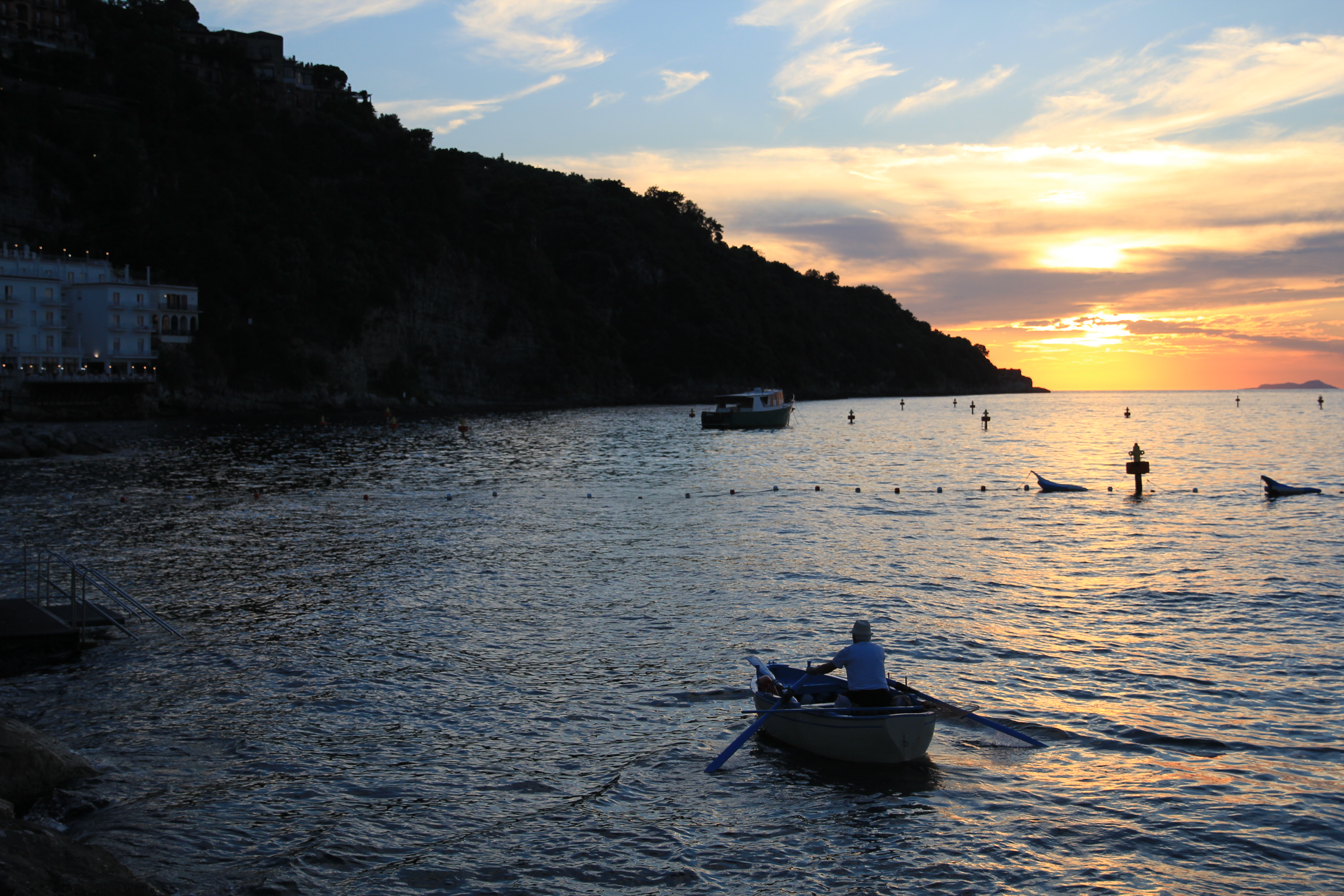
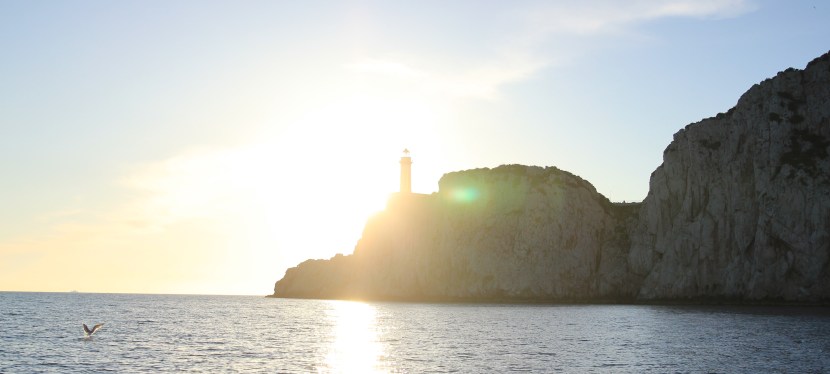
If you think Capri is special you are not alone. Long before today’s celebrities and millionaires found solace in this glamorous tiny Island, the ancient Greeks and Roman emperors fell under her spell. For me, Capri is even more beautiful when viewed from the water, and a sunset cruise around the Island is the perfect place to enjoy the vibrant show of ever changing colors.
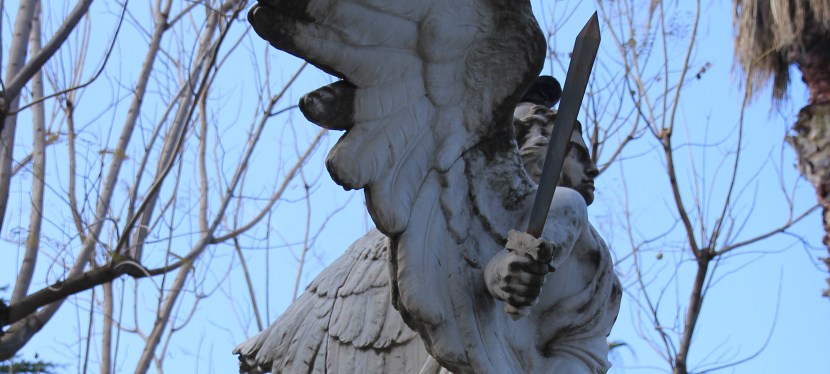
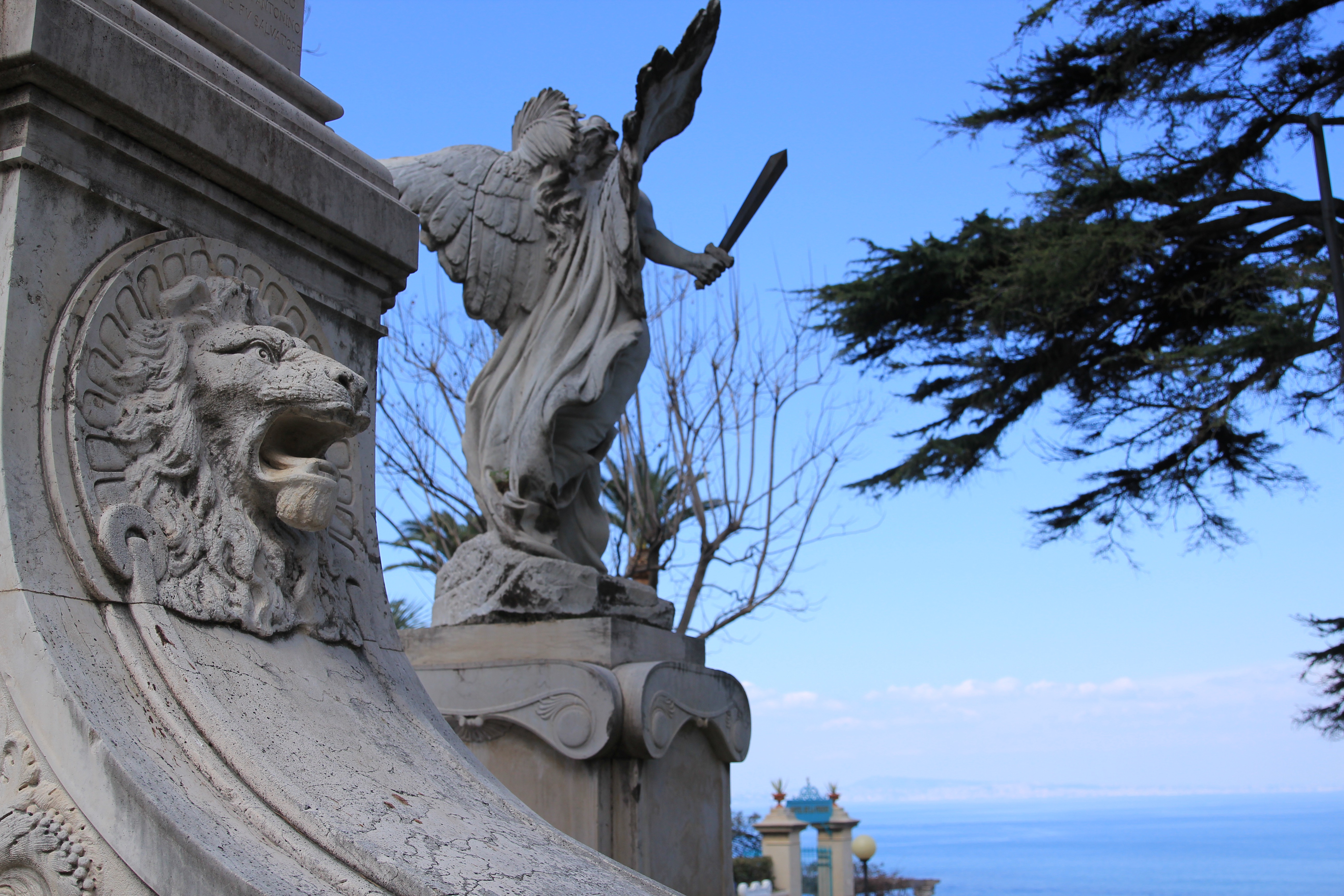
I walk by this Angel Statue nearly every day. She stands in memory of the Italian soldiers lost in the battles of World War I. The sword wielding angel, faces the water in the direction of Naples and stands directly in front of a school.
Italy is a country that reveres its children and has fewer of them than ever before. The birthrate here continues to decline and is one of the lowest in all of Europe. The children that are here are beloved. It seems as if everyone, young and old, joyfully acknowledges and warmly greets children in this country. A new baby and a beamingly proud mother in the neighborhood are treated like celebrities, with people running out of stores or across the piazza to greet them. It’s extraordinarily wonderful to see children so cherished, protected, and well cared for.
I participated in a language roundtable this week, talking in person with local Italians seeking to practice their English. As you can imagine, my table had questions that quickly turned political. But more than the tariffs, and the President himself, my table wanted to talk about guns in America. Here, the idea of guns in schools is vastly incongruent with the cultural values of the country. It seems so simple here, you protect and cherish what you love. And Italians love their children and families above all else.
The conversations, the continued shootings, the marches across the nation have all left me thinking a great deal about students, safety, and America. Progress is possible but change is necessary.
My time abroad makes it clear to me what makes America special is the opportunity it afford her citizens. Over our short history, Americans have continually adapted, changed, and evolved. In my lifetime I have seen changes to automobile safety; seatbelts, car seats, and MADD radically changing the course of drunk driving. I have seen changes in smoking regulations, prohibiting it from restaurants and while on airplanes. As a nation we’ve passed laws regulating the amount of advertising to children, while changing the legal drinking age, the legal age to buy cigarettes, and legalizing marijuana. Most recently, individual states stepped forward and lead the way to legalizing gay marriages.
We’ve faced divisive issues before and we’ve reached solutions that ultimately leave us better as a nation. The words of President Lincoln remind us that, “We are not enemies, but friends. We must not be enemies. Through passion may have strained, it must not break our bonds of affection. The mystic chords of memory will swell when again touched, as surely they will be, by the better Angels of our nature.” I pray the better angels will lead the way and effective policy change will be swiftly enacted on both the state and federal levels. I’m encouraged by the call to action I’ve seen and pray that someone in the halls of Congress, or leading one of the great States of our Union will stand like this sword wielding angel and protect what is most precious to so many of us– our children.
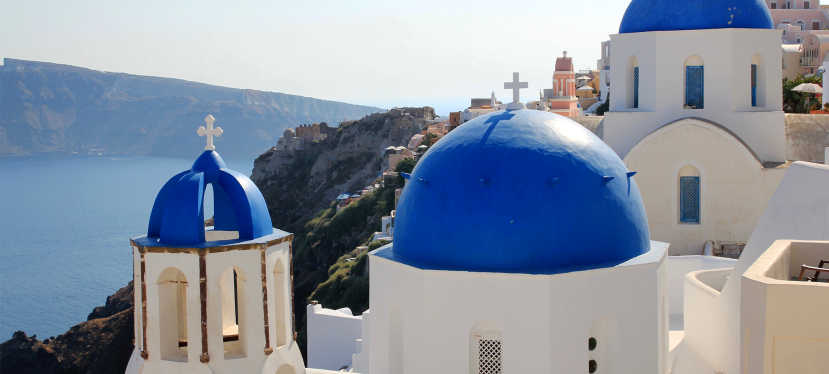
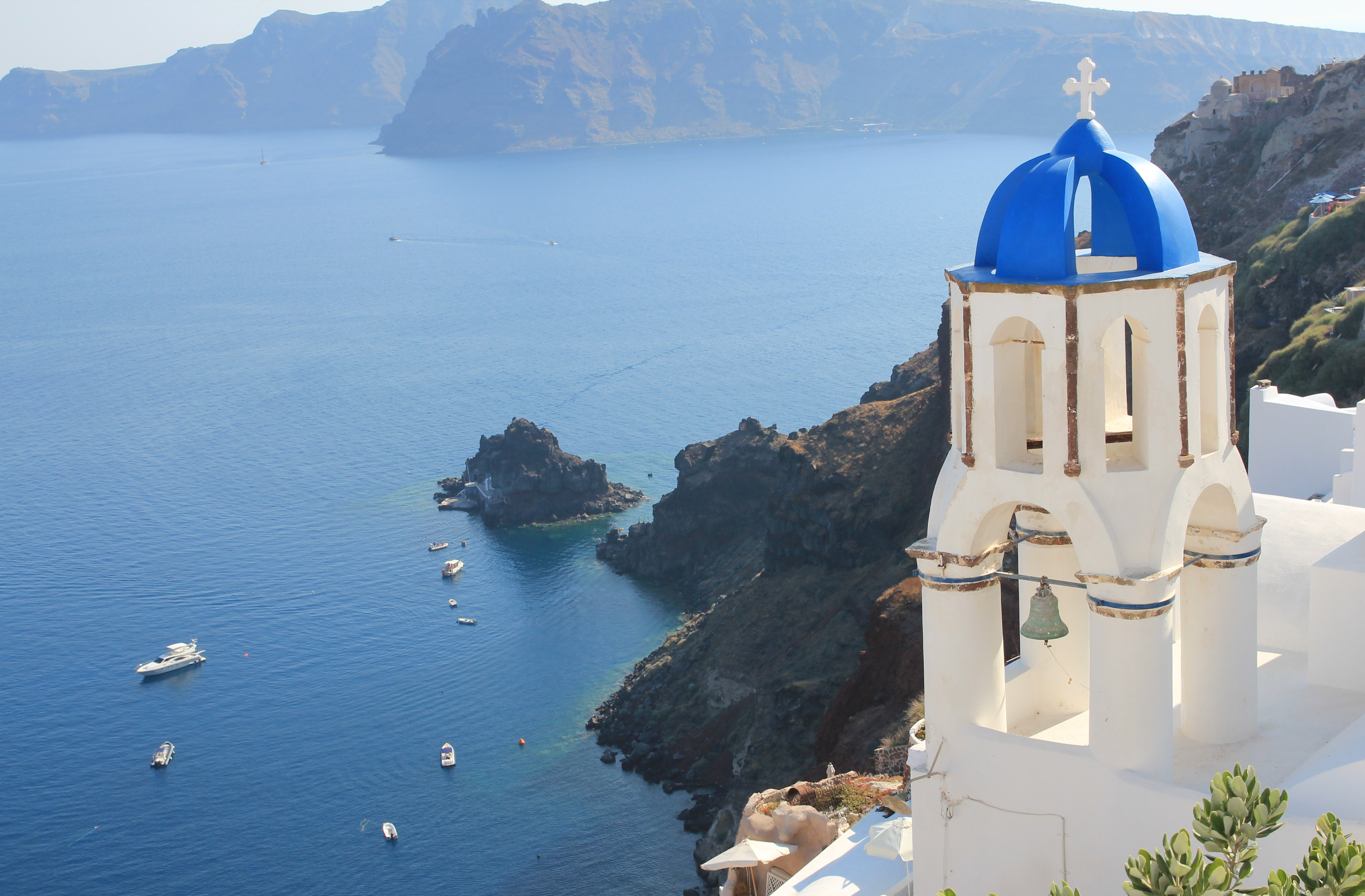
Santorini is not her real name. She’s been know as Strogill (the round), Kallisti (the most beautiful), and Theras (the son of a king). Following the Crusades of the 13th Century, the island was once again re-named, this time by the Venetians in honor of Saint Irene or Santa Irini. Fast forward a few centuries and the world over knows this sparking gem in the Agean Sea as Santorini.
The bright Blue Dome of Oia and the cresecent shape of the caldera.
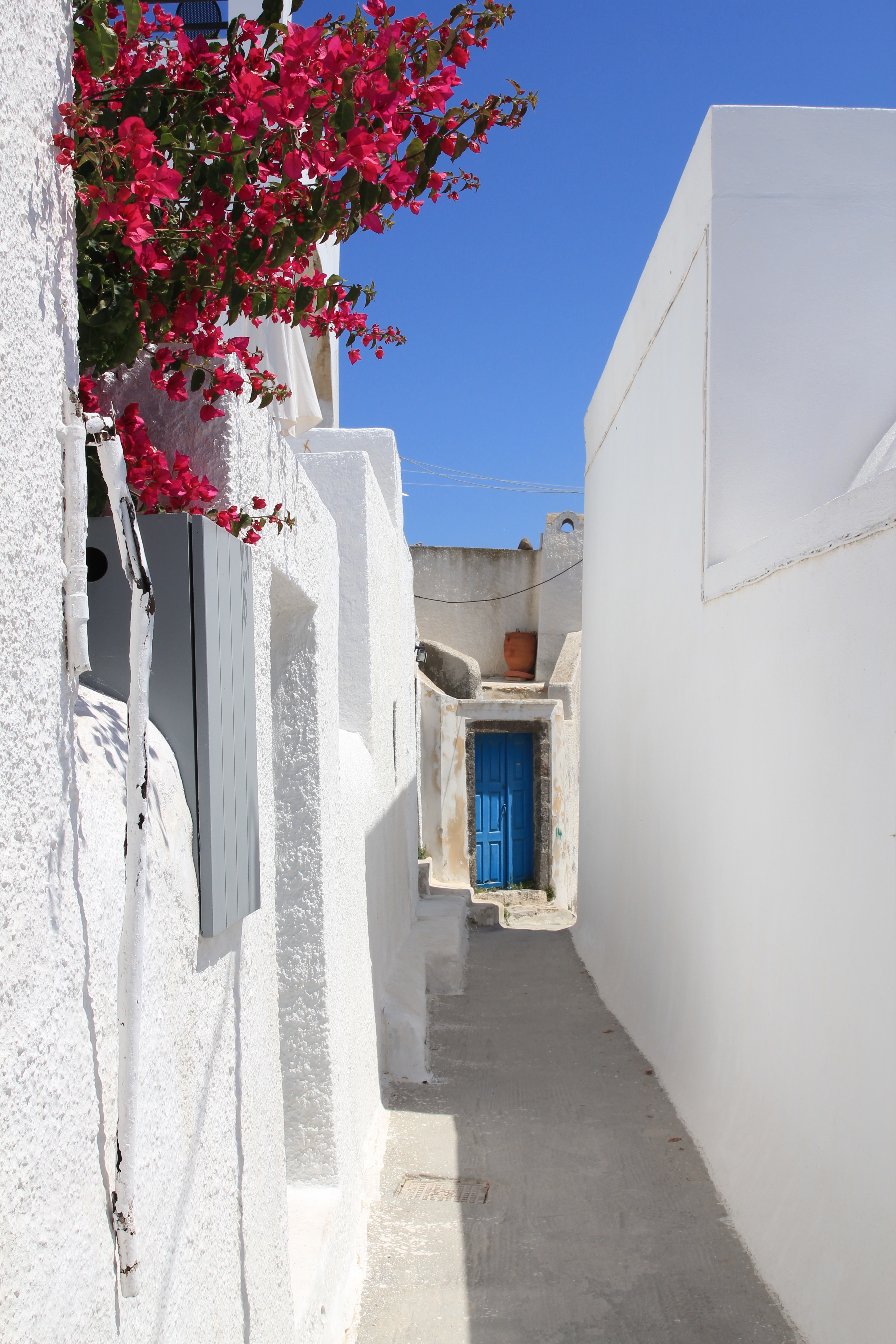
Narrow Passage Ways
The blue dome and bell tower of Pyrgos
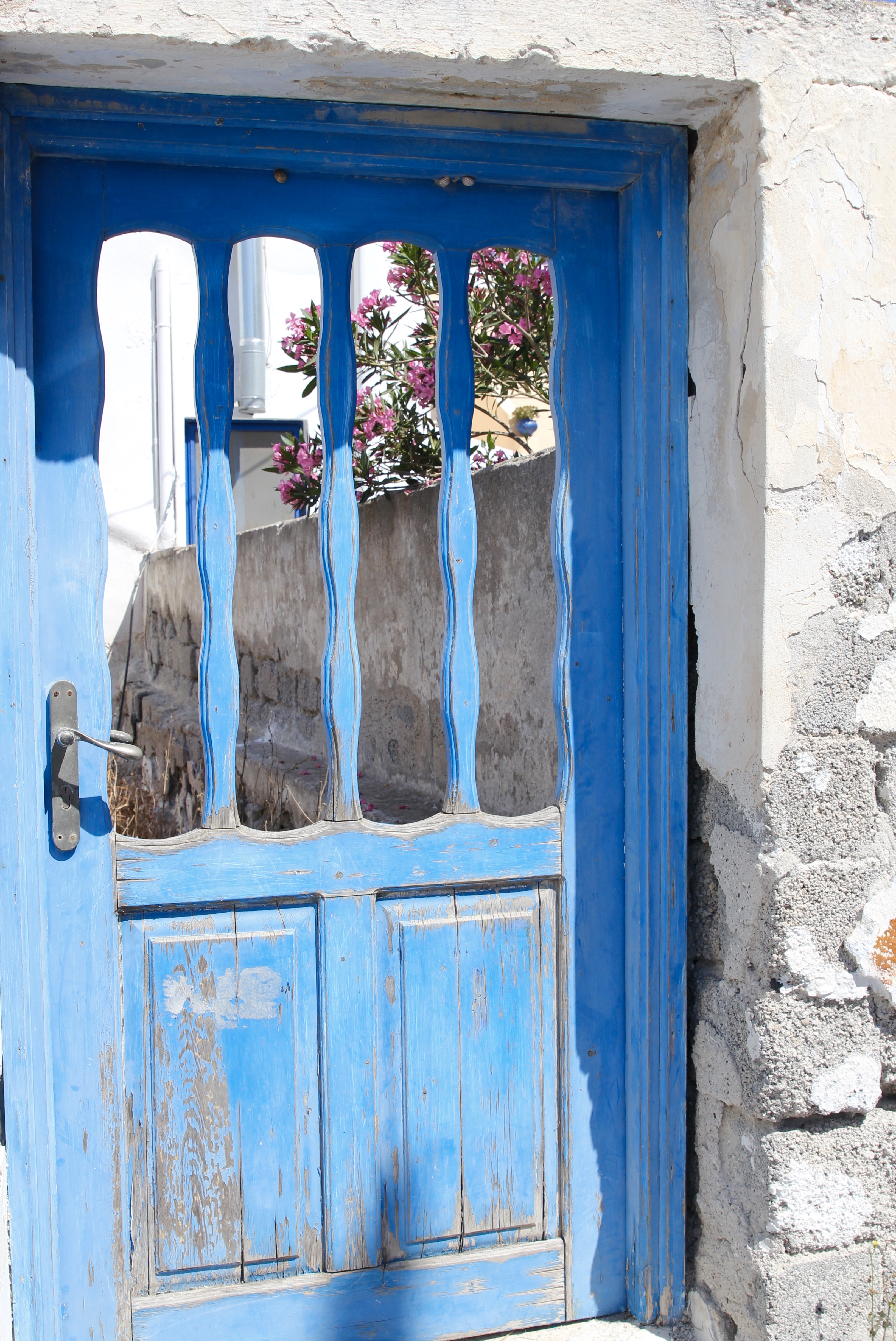
Blue doors and more
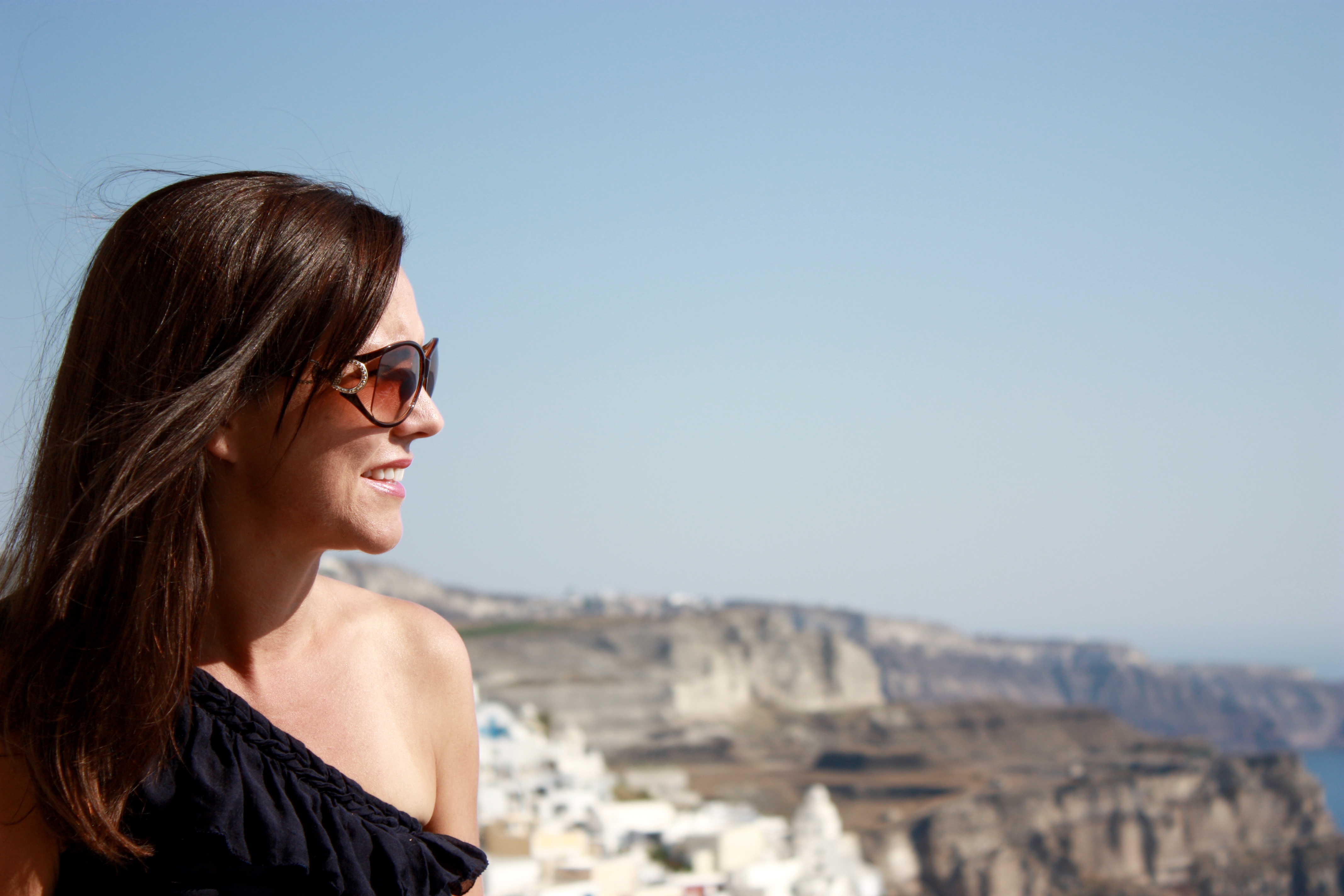
Santorini and the view from Fira
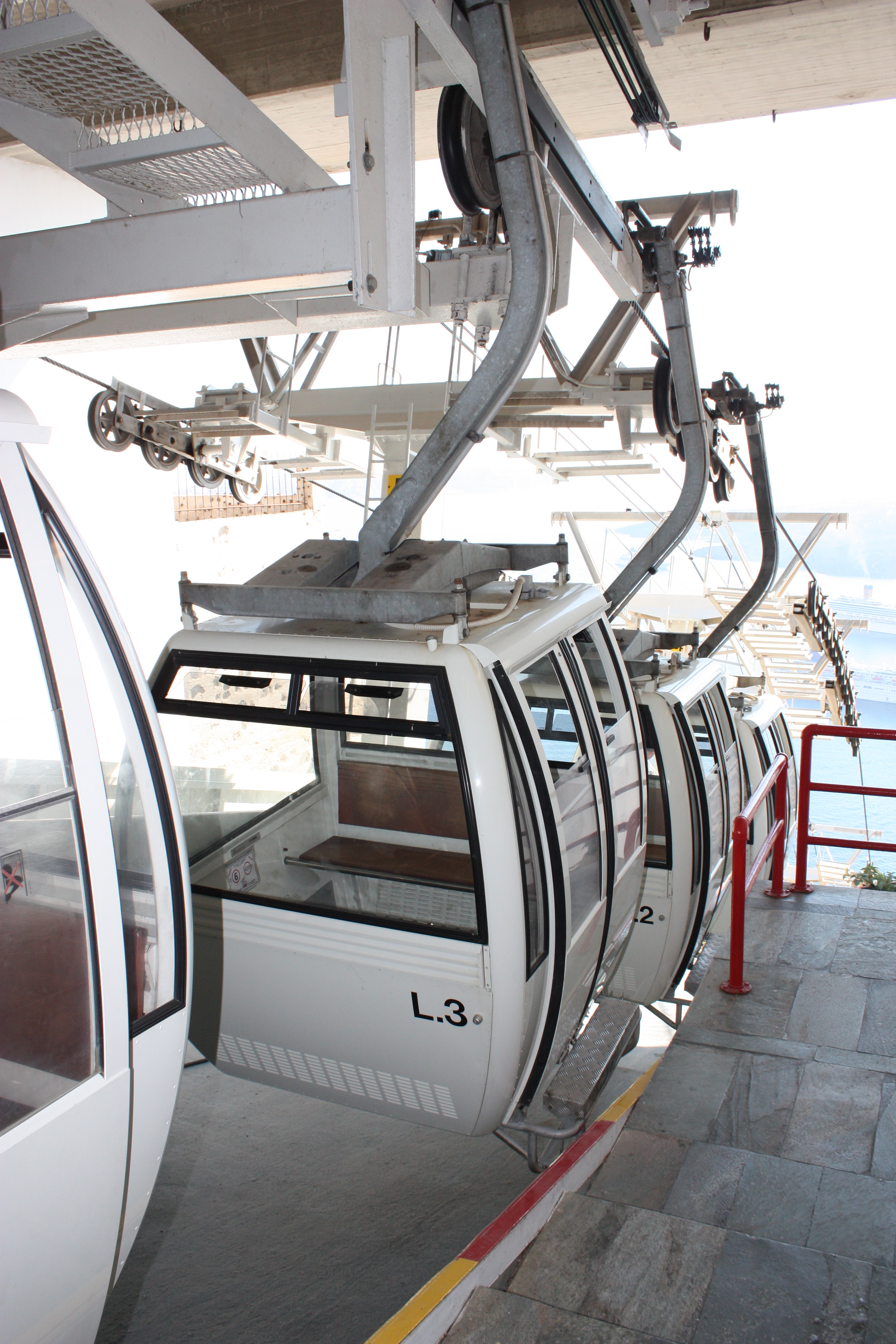
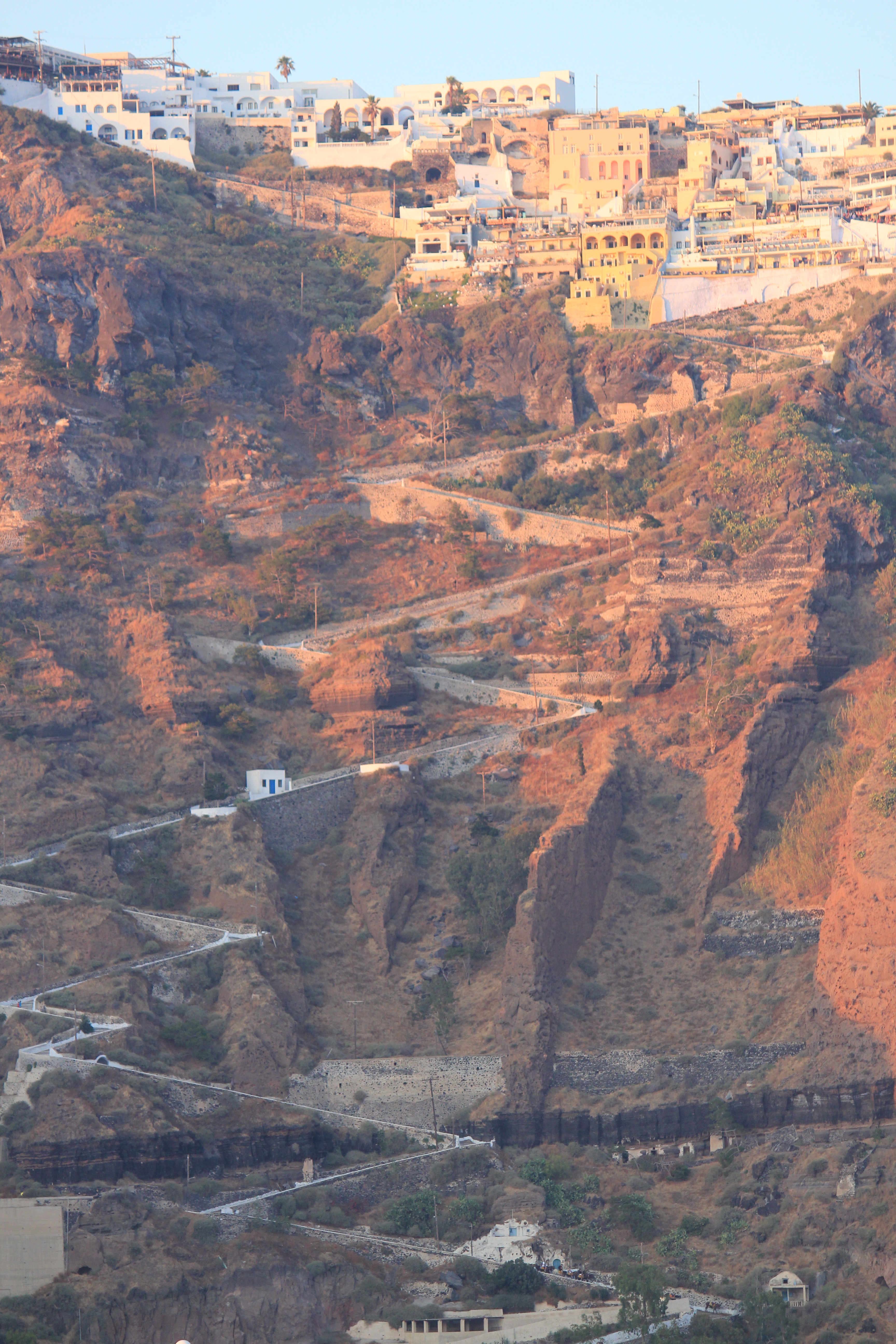
2. There are exactly two ways to arrive at Santorini, by boat or by plane. If you arrive by boat you will travel up via the funicular or ride a donkey up the 980 feet above sea level.
A smooth ride up the 980 feet of Santorini.
A view from the sea and a new point of view
3. She’s one of a kind. This series of volcanic islands in the Aegean Sea is the only inhabited caldera (underwater volcano structure) in the world. Many believe Santorini may be the Atlantis Plato wrote about. The Minoan Eruption at Santorini created a devastating tsunami in the Aegean Sea, believed to have destroyed the Minoan civilization on the island of Crete.
4. More than 3,600 years ago, someone saw the signs and knew when to get out. Scientists believe the nearly 30,000 residents of the island successfully evacuated prior to the volcanic eruption. In the late 1950’s archeologists uncovered the near perfectly preserved city of Akrotiri encased in three to six feet of ash.
Artifacts recovered from the site indicate the city was active in trade with other parts of the world and sophisticated in design. The site, now open for tours, reveals multilevel buildings, indoor bathrooms, sewage systems, and elaborate frescos. With no trace of human remains or valuable objects left behind scientists believe the residents most likely successfully evacuated the island.
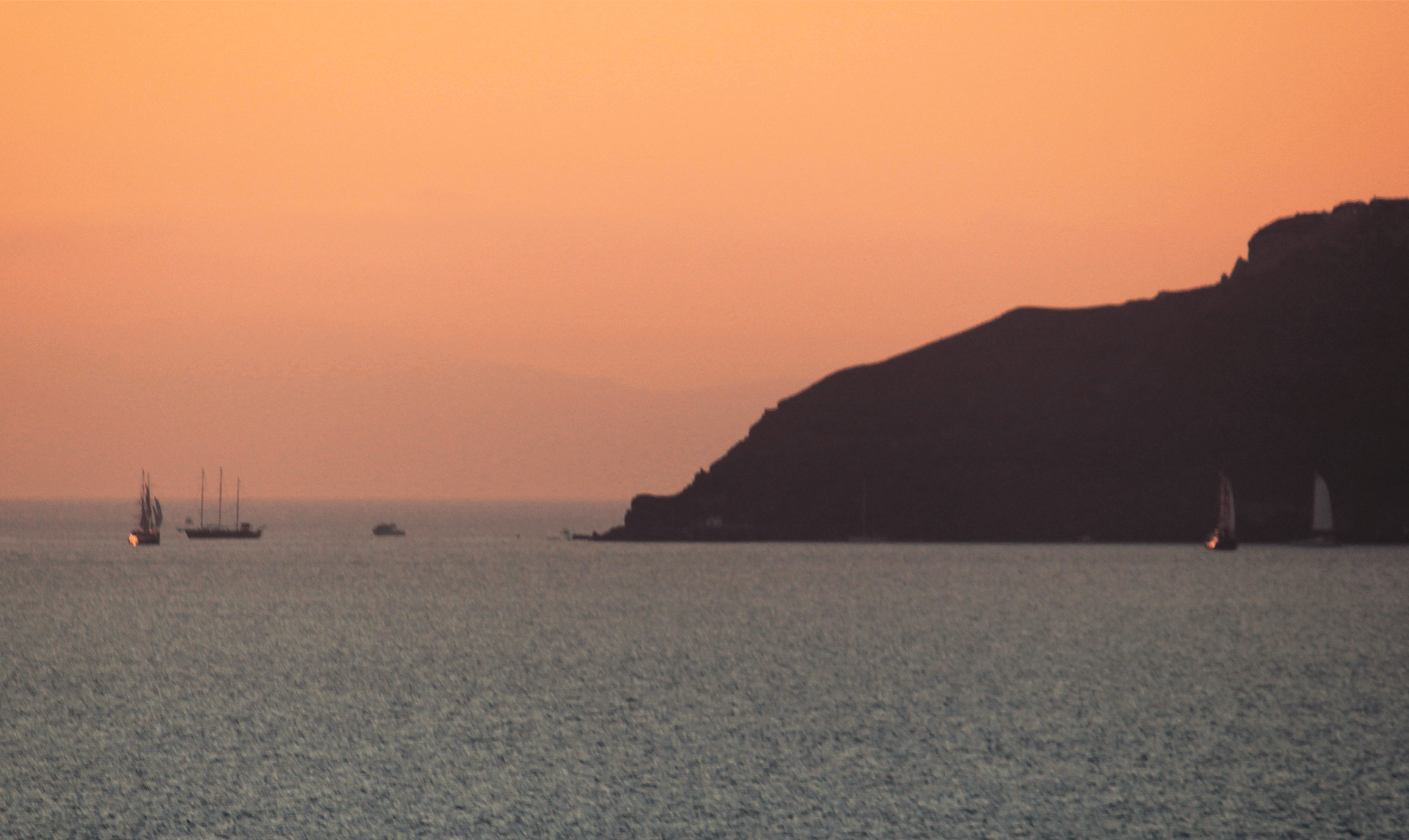
A golden sunset captured from the Aegean Sea.
5. Santorini remains an active volcano, in a quiet state. Scientists have found evidence of at least twelve large eruptions in the last 200,000 years. An small episode of unrest, now in remission, was recorded as recently as 2011-2012.
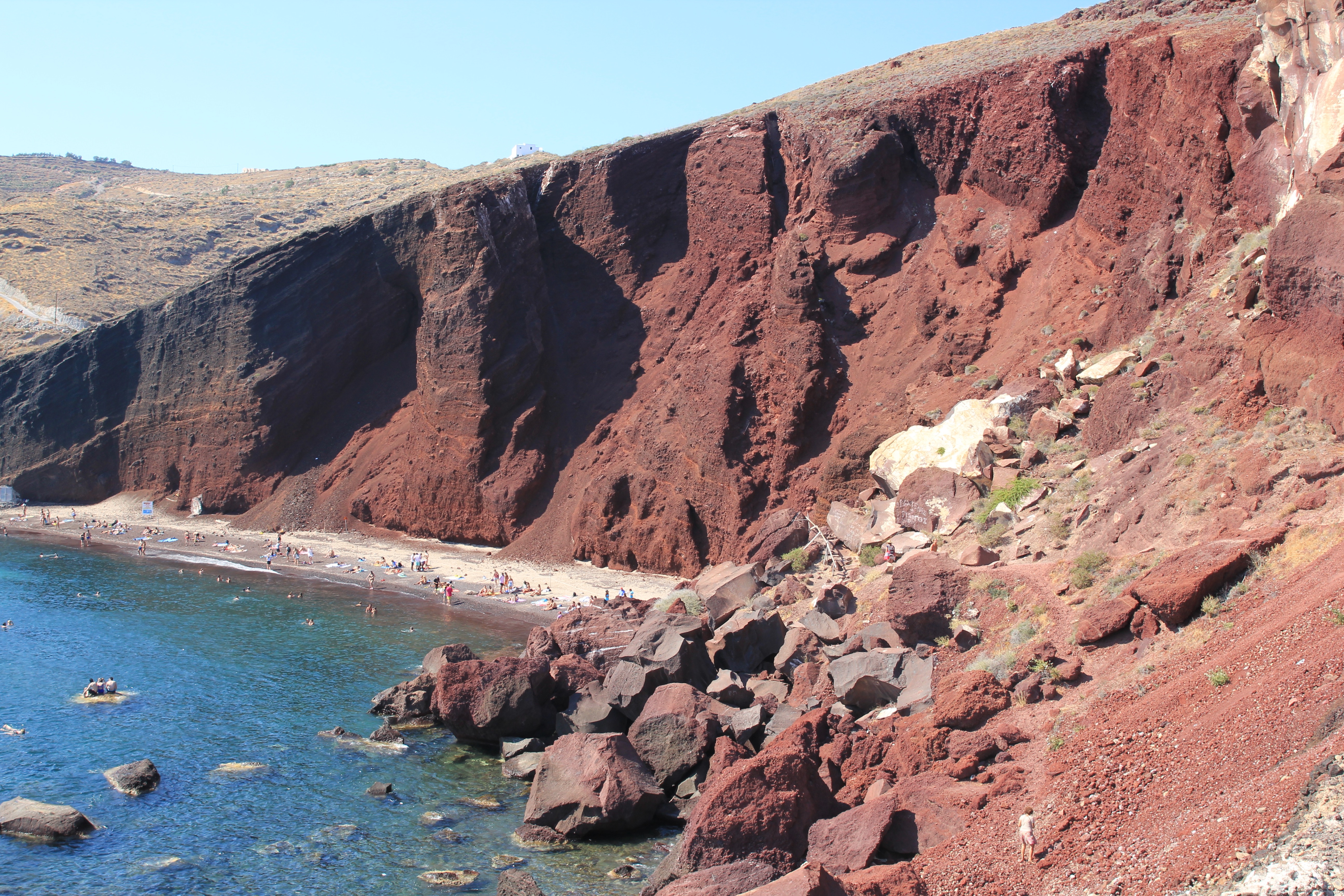
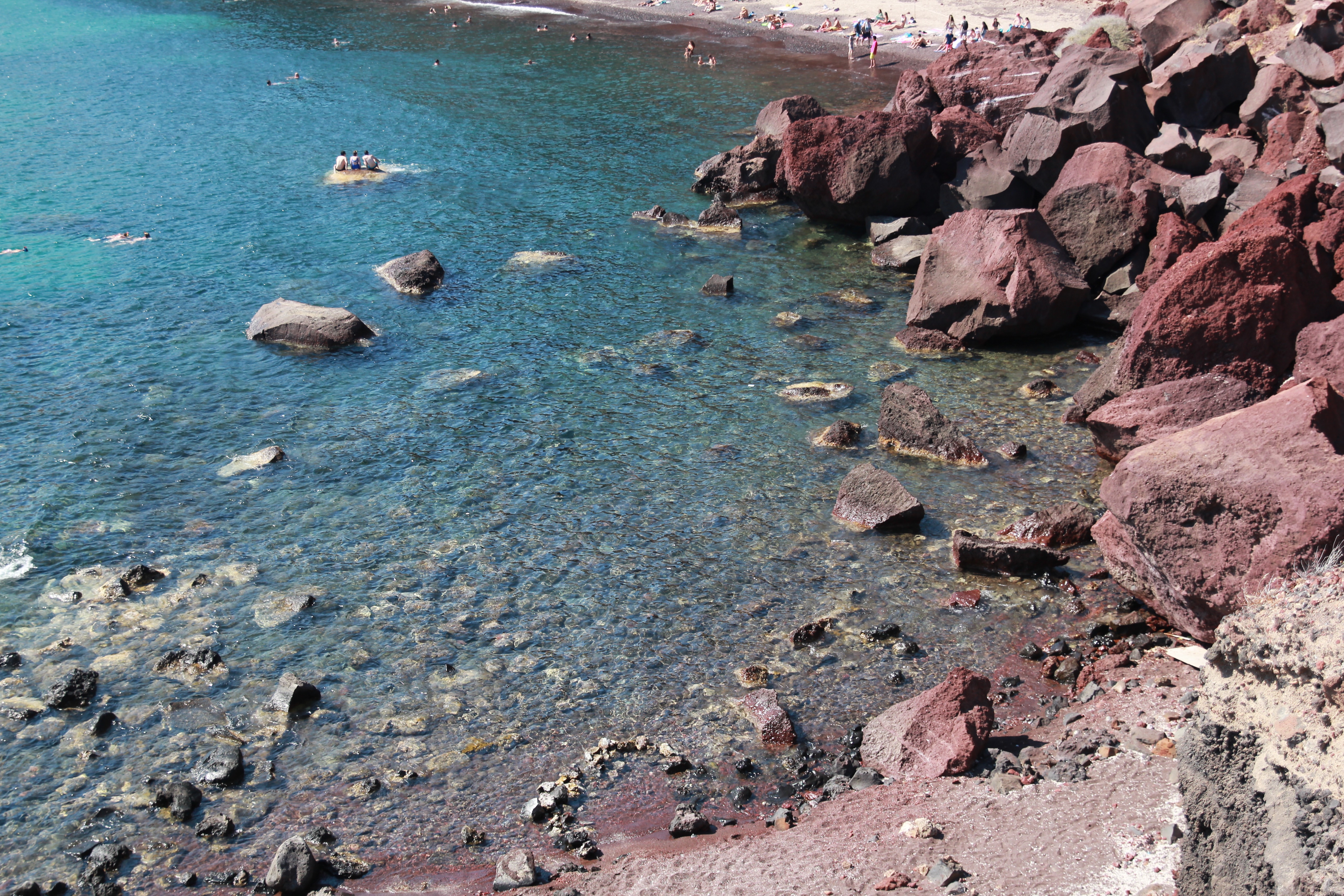
6. The volcanic activity of Santorini left behind remarkable beaches in vibrant hues including volcanic red, white rock formations, and black stone beaches. On one side of the island, Akrotiri, you can hike the stunning Red Beach.
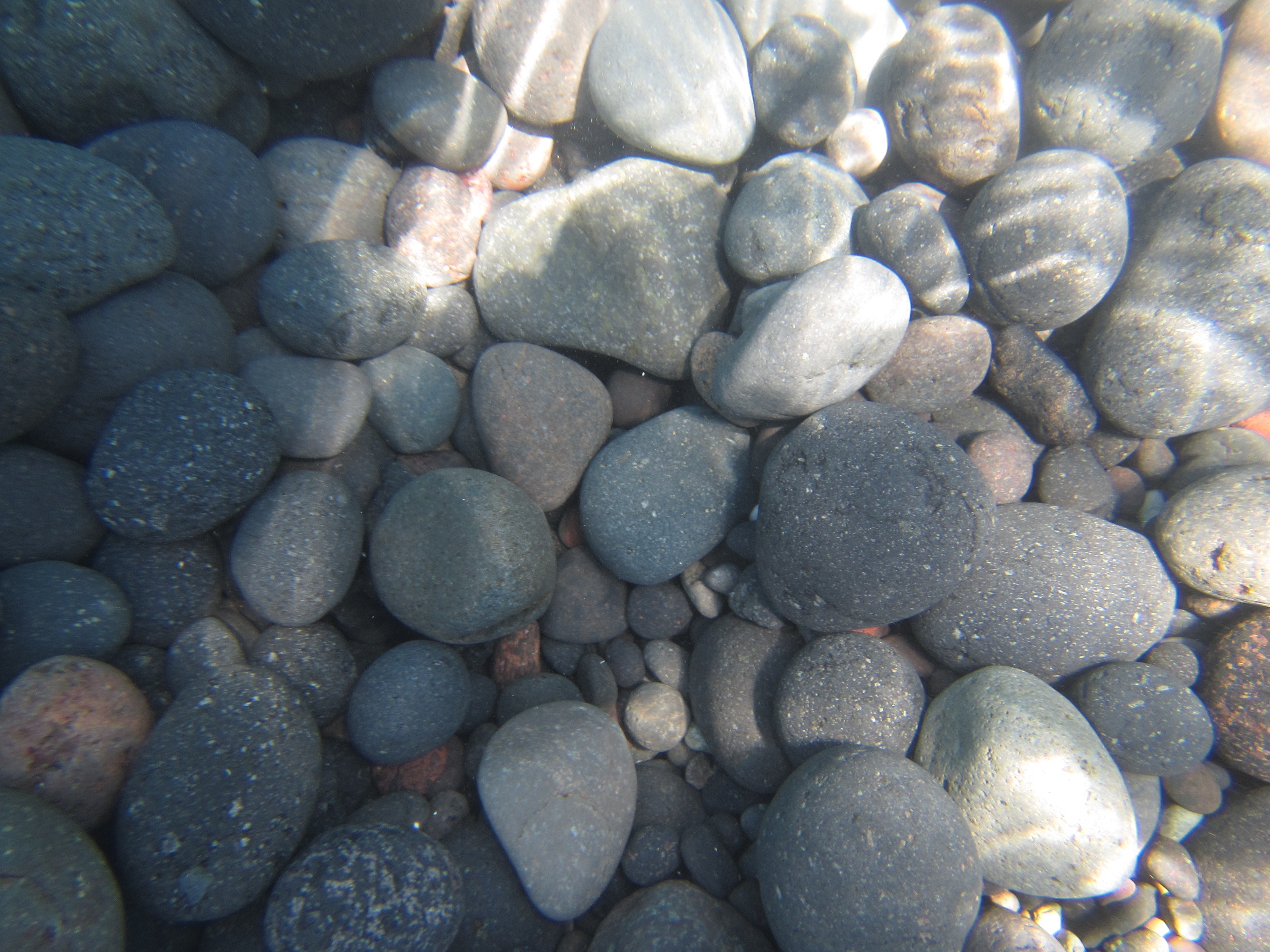
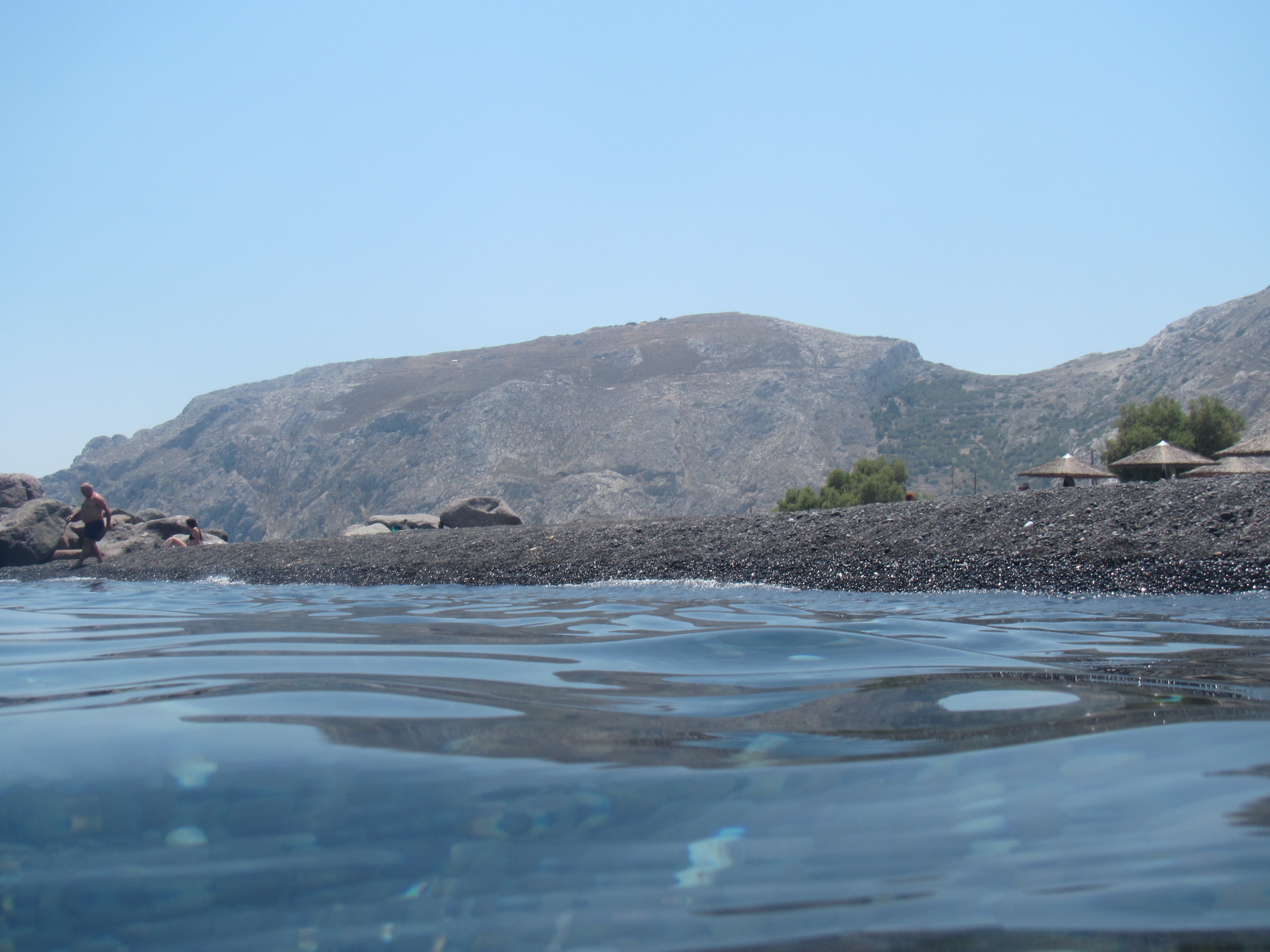
7. On the other side of the island, and the town of Kamari, you can enjoy the Black Sand beaches of Santorini. Side note here, the beaches are beautiful but can be painfully hot. The word sand, is used very loosely here as the black sand beach could be more accurately described as a black stone beach.
Clear water and black stones await at Kamari Beach
Mesa Vouno from the beaches of Kamari
You’ll find pathways to your chairs but you may want to pack a pair of flip-flops (or sacrifice a pair of leather sandles to the Aegean Sea as I was forced to do) to make your walk into the sea more comfortable. While you will not want to walk around Santorini in flip-flops, you’ll be glad to walk from your beach chair and into the water.
8. Staying in the smaller section of Kamari offers a welcome respite from the crowds. The black sand beaches are nearby at the end of street and there are plenty of beach clubs and cafés ready to welcome you to Santorini. Transportation to the airport and the towns of Oia and Thira is easily arranged.
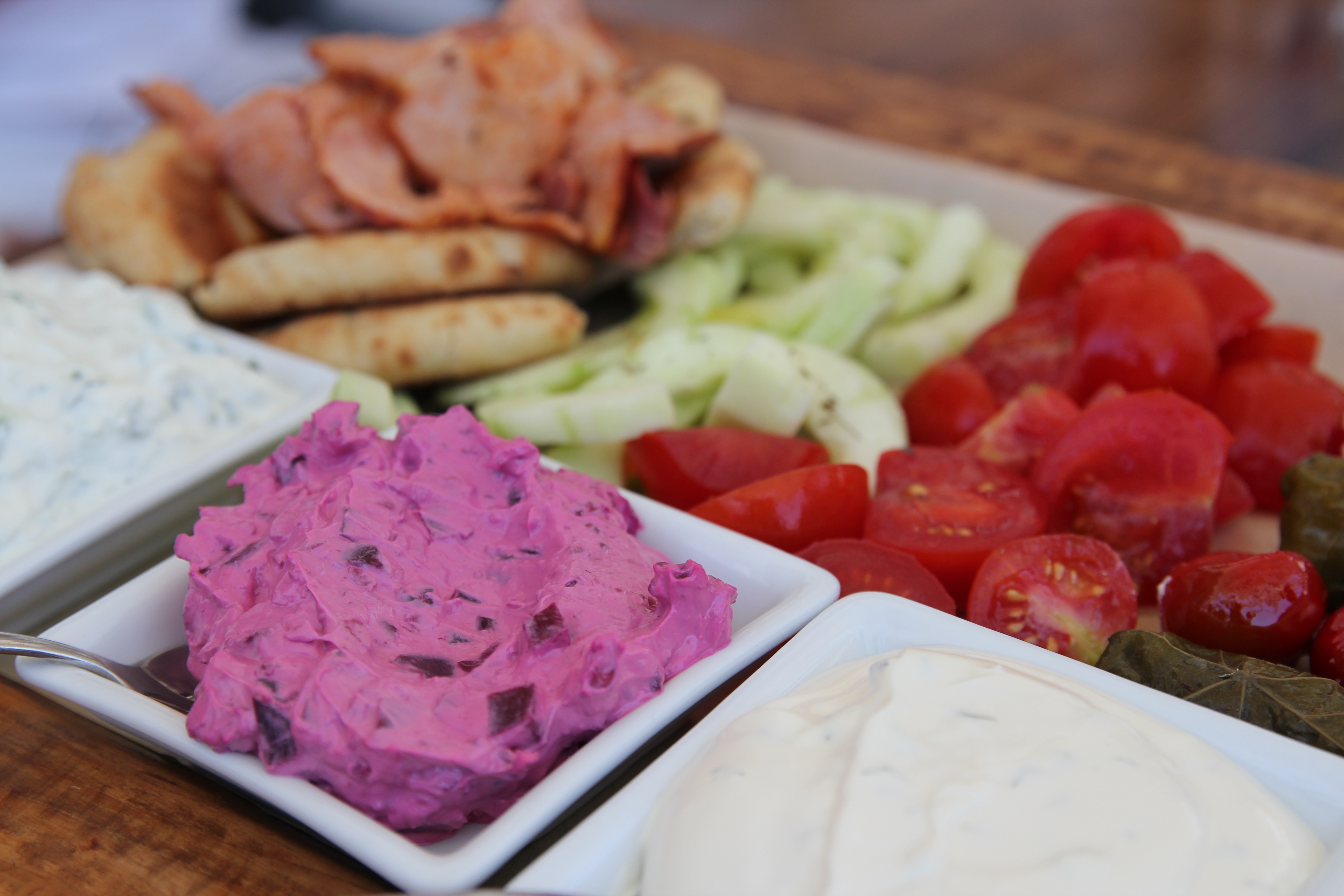
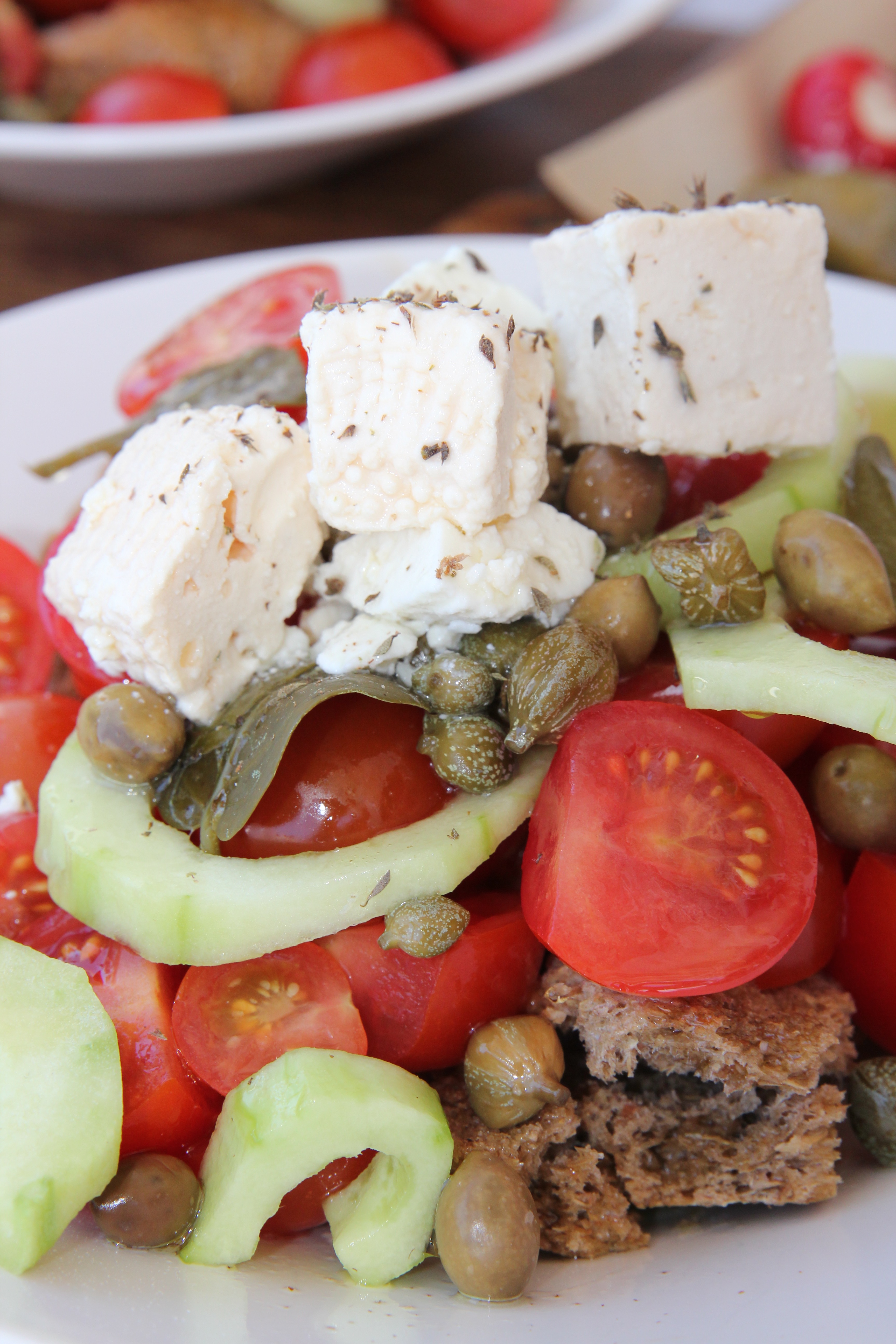
9. Despite being a volcanic island with a limited supply of water, you’ll enjoy some of the most delicious and fresh Greek food available. Volcanic soil is mineral rich and the produce on the island is something extraordinary.
The most delicious Greek yogurt spread.
Authentic Greek Salad. No lettuce and designed to be shared.
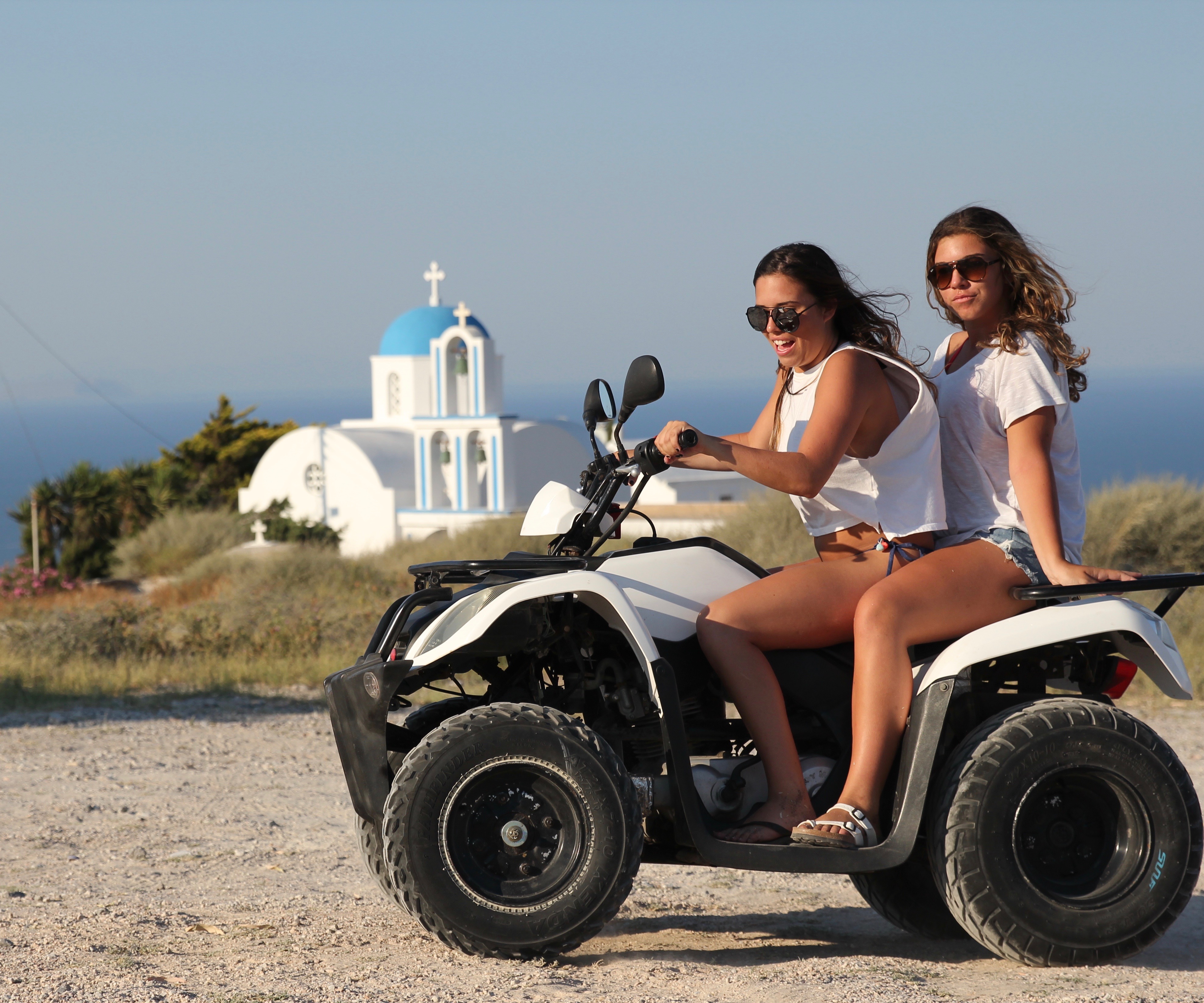
10. There is a lot of ground to cover during your visit to Santorini. Be prepared to do plenty of walking and pack shoes that will help you do so. Renting four wheelers and cruising the island is a spectacularly picturesque and incredibly fun way to visit the different towns.
It was an all too quick trip work trip. Conference sessions quickly filled up my days keeping me inside the hotel. But late one afternoon, I ventured out and stepped into the brisk sunshine. A few blocks from the hotel, I climbed aboard a city tour for a quick jaunt around the majestic city. Ablaze in autumn splendor, Montréal dazzled and delighted, leaving me wishing for more time to spend in this the largest French speaking city in the world. C’est magnifique!
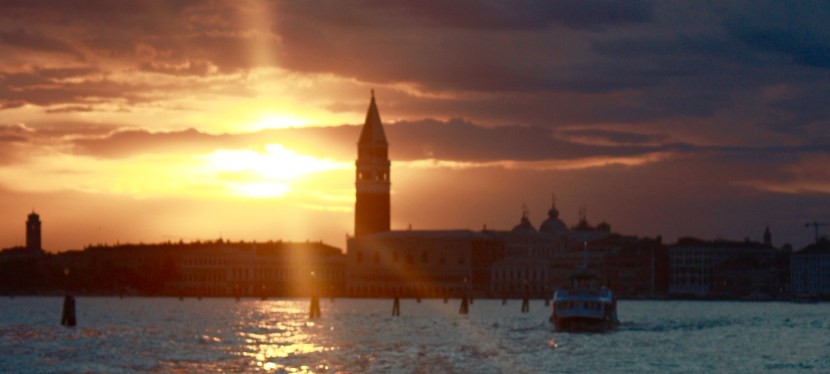
As the sun sets, and the crowds subside, St. Mark’s Square transforms into the most delightful of places. The orchestras on bandstands throughout the square take to the stage. Music fills the air serenading lucky visitors and local residents alike as silver tray service and debonaire white jacket waiters add to the magic that is St. Marks after sunset. In the span of an evening you may see a proposal on bended knee, a elderly couple dancing a waltz, and scores of brides and grooms posing for photographs. The cobalt blues of the cathedral and brilliant golds of the mosaics cast a ambient glow that showcases this treasure of Venice in perfect light.








 Postcards and Prosecco